Showing posts with label Curlew. Show all posts

Friday, 29 March 2019

End of March round up


Video Clips
Meadow Pipit
Peregrine
Red-legged Partridges
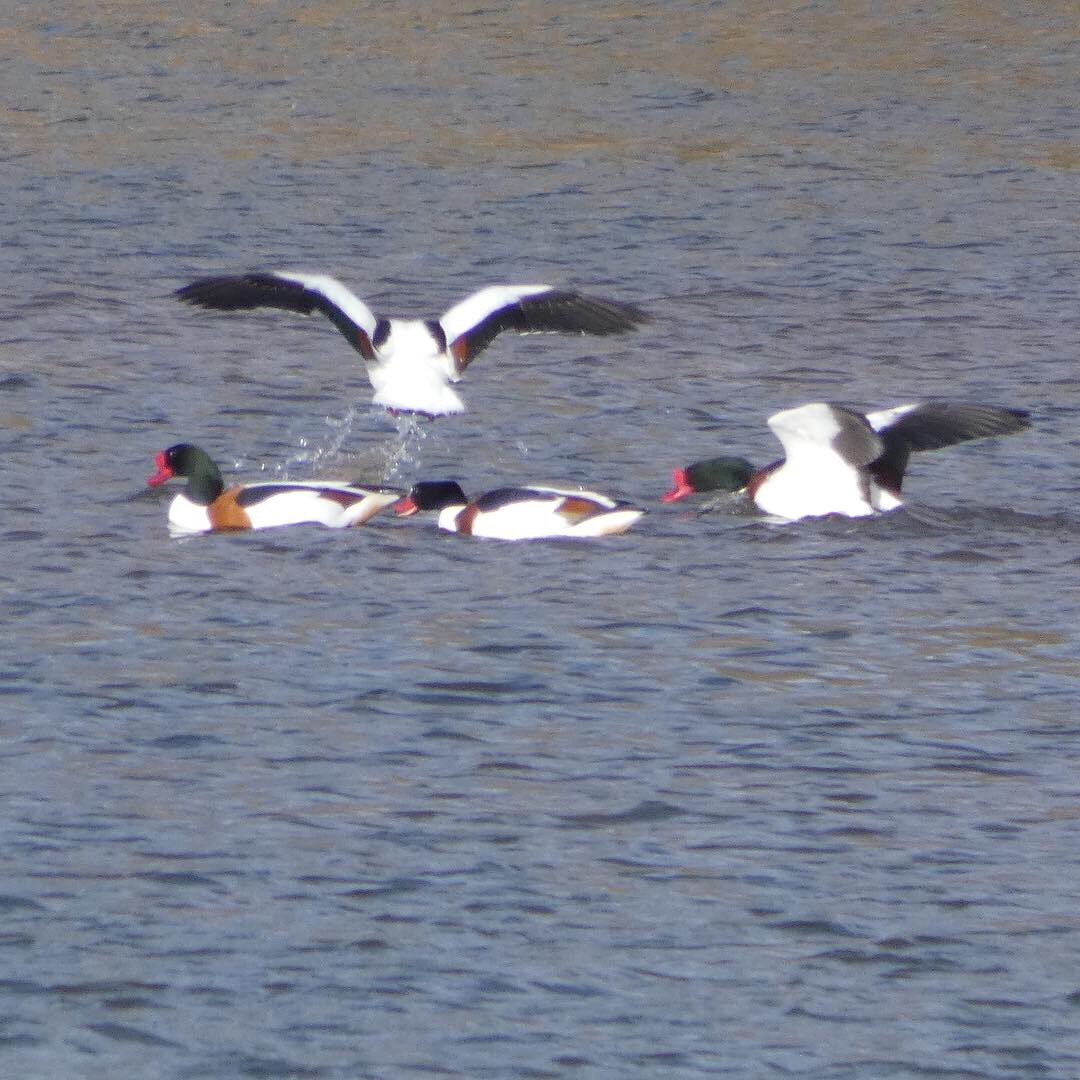
Feisty Shelduck

Spring certainly picked up a pace last weekend as I made four visits on consecutive days. The weekend before started well in our first Little Ringed Plovers arriving. It didn't take them long to become territorial.

On Saturday morning our first Sand Martin came through over the plantation heading from the west. The highlight of the morning for myself & Paul was two Curlew that flew in over the main pit before landing in the A46 flash. Curlews are now a rare visitor at the pits, with only one record last year. The birds fed in the flash but moved on over night.

Sunday was count day which gave us four year ticks which were a Swallow, Dunlin (on flash), a Rock Pipit which Jon picked up in flight & a Ringed Plover.

Other sightings included 15 Little Grebe, 2 Cormorant, 14 Mute Swan, 14 Greylag, 58 Canada Geese, 6 Shelduck, 1 Wigeon, 21 Gadwall, 139 Mallard, 41 Shoveler, 5 Pochard, 89 Tufted Duck, 2 female Goosander, 21 Buzzard, 1 Peregrine, 1 Red Kite, 14 Moorhen, 136 Coot, 4 Oystercatcher, 5 Lapwing, 8 Black-headed Gull, 1 Lesser Black-backed Gull, 57 Meadow Pipit, 1 Fieldfare, 1 Siskin, 7 Chiffchaff,  2 Jay & 30 Linnets. 

Mark found our first Wheatear on Monday which was great to see after work. An additional male was also found on Wednesday before both moved on overnight. Perhaps find of the weekend was Paul's seven male Brambling that landed together close to the main pit. 

Thursday, 24 November 2016

Winter surprise at Upton Warren

Distant Goldeneye
Kingfisher
Curlew
Curlew
Secret hiding spot
Little Egret
Kingfisher

Upton Warren had a surprise visitor last week in the form of a male Goldeneye. I can't ever remember seeing one at Upton before, strange as you would have thought the Moors pool would be ideal in terms of depth, perhaps it's not wide enough. Bartley & Draycote are always the best local places to see them. 

Over 27,000 Goldeneyes winter in the UK however there is only 140 breeding pairs. It is encouraging to read that this number is increasing as the ducks are using nest boxes as excavated holes in trees are less available. It is thought less birds now travel to the UK each winter due to mixed winter in Europe.

I had to be content with a distant shot due to the suns position. In front of the hide a Kingfisher was looking for a late breakfast. It was great to see the bird move round the area trying his luck from different positions. It's a bird I never tire of seeing.

Other highlights included 8 Curlews taking advantage of the great work the work party has completed, a Little Egret, 105 Coot, Great Crested Grebe, Green Woodpecker, Grey & Pied Wagtail, 12 Pochard, 6 Shoveler and 80 Teal. 

Monday, 14 September 2015

Sunday Stint at Upton Warren

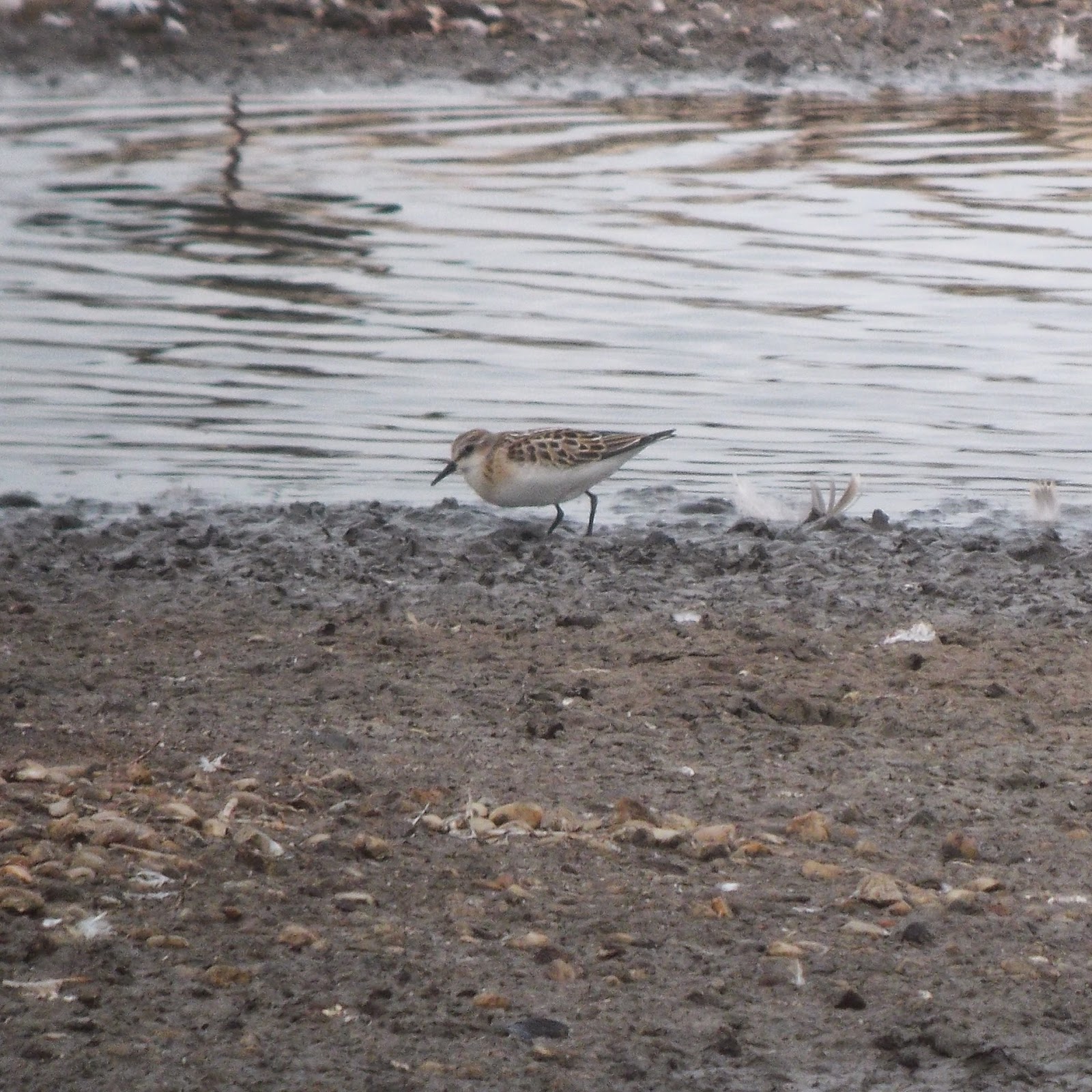
Little Stint
Little Stint
The Flashes, Upton Warren
Common Sandpiper
Green Sandpiper
Curlew

With England getting bowled out cheaply in the last one day international and only the awful Villa on Sky I decided to head over to the Flashes at Upton Warren for a couple of hours. The previous days Little Gull had moved on (which I called in for) via a awful match at the Hawthorns however start attraction was a juvenile Little Stint. The bird was difficult to locate initially as it was asleep on a small island between two Lapwing however once awake it allowed some nice views to a packed hide.

A single Avocet remained wildfowl included 30 Greylag Geese, Gadwall, 60 Teal, 50 Shoveler, 100+ Mallard and 55 Tufted Duck.

The Flashes is always a great place to see waders at close quarters and I managed to get a couple of nice shots Common & Green Sandpiper and also one of the 19 Curlew.

I had a good catch up with warden Paul Anthony about the good, bad and the ugly of sport and birding before heading home. Top afternoon and it got better when I heard the Villa had got beat.

Monday, 23 March 2015

Movement slow at Salford Priors

Sunrise at the pits
Curlew (Patch first)
Weekend coffee break
Sunday find
Little Ringed Plover

Three visits to Salford Priors this week to report on. Thursdays after work visit was rewarded with my first two Curlew at the site. The Curlew were feeding in the Snipe meadow but were not very settled as they twice took off and did a large lap of the site before landing again.

I was on site by 6.10am on Saturday and first bird of the day was a single Dunlin and a pair of Common Sandpiper on Pophills Pit. Along the main pit the Reed Buntings were establishing tertitory whilst a Green Sandpiper was on the far side.  There was a flock of 15-20 Pied Wagtails feeding in the old workings area. The first Sand Martin of spring came through at 7.56am which was most pleasing. Singing Chiffchaffs had increased to five across the reserve. 

Fellow patch birder had found a Ringed Plover on Saturday evening so I was keen to try and relocate the bird first thing on Sunday. However I called in to check out the Little Owls first of all. Whilst initially there was no sign as I headed back past towards the car I noticed the female was watching me closely from a different viewing point before disappearing back inside the tree.

Down at Pophills there was no sign of the Ringed Plover. There was a single Common Sandpiper, a pair of Gadwell & Teal along with regular Coot and Tufties. Three Green Woodpecker were flying around the bunds together allowing some great views. There really wasn't much else to report as there has been no significant changes over night. I caught up with Lee by the Snipe meadow as Skylarks sang above us. I flushed a few Snipe up on the bunds before heading back to Pophills for a final look. At the first glance it looked the same as earlier but after setting up the scope I picked up a Little Ringed Plover. I edged along the hedgerow to confirm my identification and you could clearly make out the yellow orbital ring around its eye. Happy days………..A good find at the end of a frustrating morning.

Wednesday, 4 March 2015

Final work party of winter at Upton Warren

 Returning Avocets
 The Flashes

 Shelduck Nest box
Turf digging for nest Shelducks
Rescue of parts from old nest box
Work party in full swing

I felt it was only right to help out on the last work party before the breeding season at Upton Warren on Sunday. Thankfully the weather was kind to us although a few layers of clothing was needed before we headed down to the Flashes.

Before work commenced we had a quick session from the hide. It was great as always to see the returning Avocet whose numbers had already reached 16. We flushed at least 10 Jack Snipe and 20 Snipe before commencing the duties. Other sightings included eight  Shelduck, 20 Coot, a pair of Mute Swan, 11 Curlew, 200+ Lapwing, two Oystercatcher, two Little Egret, 5+ Herring Gull, 50+ Black-headed Gull and a single Linnet.

A good party of 14 included Dave W, Des J, Fraser D, Ian J, John L, Mary O, Mike W, Paul, Phil W, Rich, Tim O, Tracey B, our leader John Belsey and myself were on hand to work through a number of tasks including  rebuilding the two Shelduck boxes, clearing the main breeding island of vegetation, relaying the first flash islandinstalling heavy duty fencing along the stretch north of the hide, clearing the smaller shingle islands, laying wood chippings along the low points of the main path and checking the fox fence.

As always there was good quality home made lemon drizzle and sausage rolls. A great effort by every one. I for one was nursing a stiff back on Monday morning.


Sunday, 30 November 2014

Bewick's Return

Entrance to Slimbridge
Bewick Swan Family
My arty attempt of Pintails
Curlew
White-fronted Geese
Wigeon
Teal
Common Crane (GCP)
Bewick close up
The superb book shop


After a great start to the day in Bristol I stopped in at Slimbridge to catch up with the returning Bewick Swans. It was nice to see them at close quarters in the Rushy pen but also out on the Dumbles with the thousands of other birds. I managed to count around 40 Bewicks include a good number of young birds.

There were two pairs of Cranes showing territorial behaviour and one pair fully chased off the second pair and lets hope they manage to breed again next year. 

From the Holden tower I picked up the Juvenile Marsh Harrier I observed on my last visit whilst other sightings included a Peregrine, 2 Buzzards, 500+ Dunlin, 1000 Golden Plover, 200 Barnacle Geese, 200 Lapwing, 50 White-fronted Geese and 2 Little Stints.

The Tack Piece was full of birds including 4 Crane, 20 Ruff, 50 Curlew, 200 Black-tailed Godwits, 200 Dunlin, 600 Wigeon, 40 Pintail, 200 Teal and 800 Lapwing.

After a good scan and sandwiches on the move I had a good trawl through their great range of books, avoiding drawing the debit card out ! 


Sunday, 16 November 2014

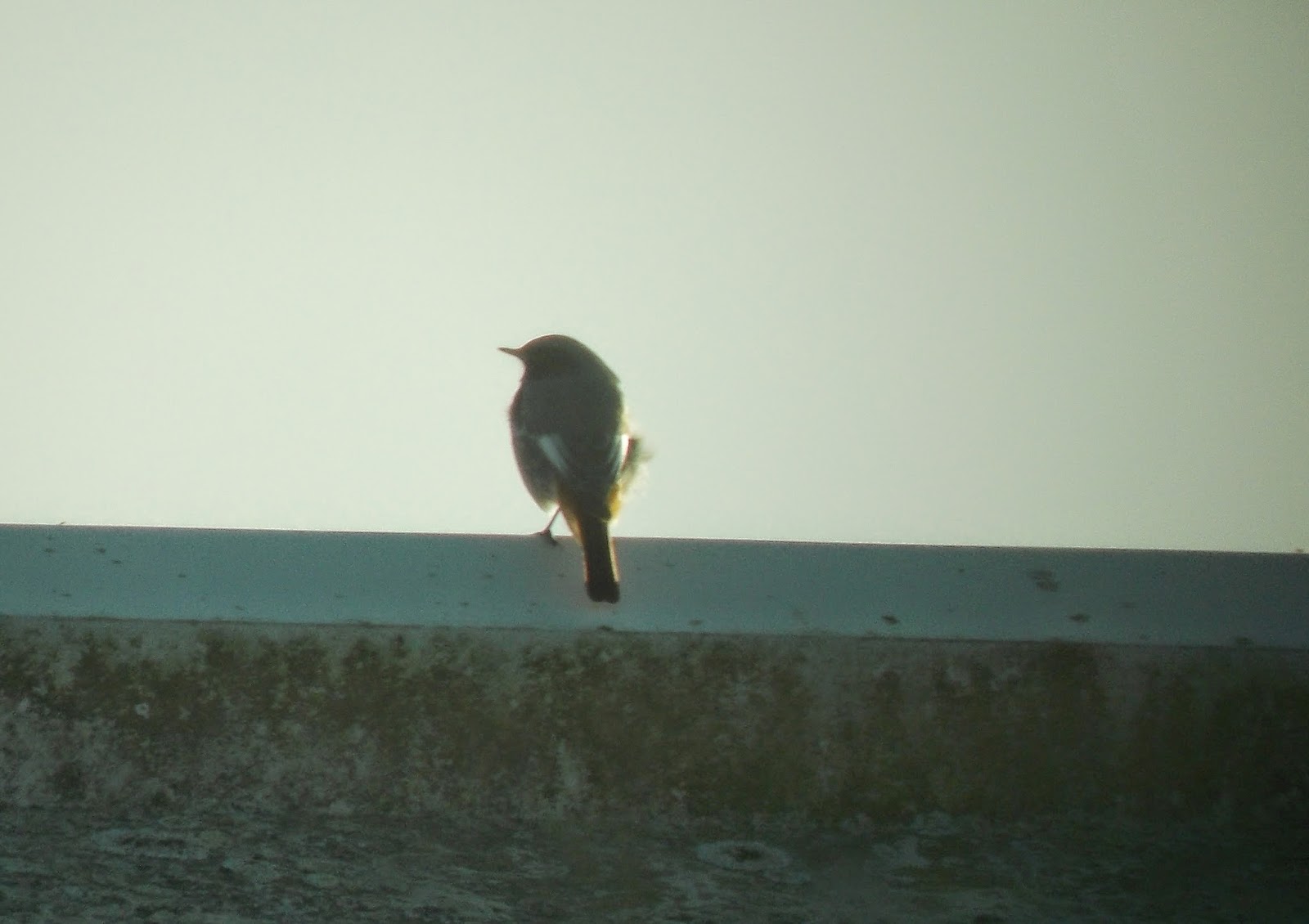
Black Redstart in Sharpness

 Digiscoped Black Redstart
  Digiscoped Black Redstart from distance
 Distance view
 Pied Wagtail
 Grey Wagtail fly catching
Sharpness Docks, Gloucestershire

In my three years of birding seriously the Black Redstart has been a real bogey bird which has just avoided me where ever I have been. There has been no lack of effort as I even double dipped the species a couple of weeks ago 90 miles apart. 

I didn't need a second invitation when Vern and "Breaking" Phil were going for a drive down the M5 at lunch time. ("Sauntering" Phil was apparently shopping, poor chap) 

The docks looked to be a great location for the bird with a number of flat and vegetated roofs and I'd noted in the British Breeding Atlas a breeding dot was shown in this area. As soon as we parked up I saw a bird drop from the large building in front of us into a tree and then pass us to the top of the nearest house. The flight view showed the red on the  tail and once landed you could see his robin size, domed head and vibrating tail. It's sessions like this you really appreciate having a superb telescope. 

During the session we located two different birds that seemed to be working their way around the docks every 30 minutes. The good light enabled me to get a few digiscoped images however it wasn't easy as the birds were on the move all the time. Vern's image can be seen here. With less than a 100 breeding pairs (RSPB) it was a real pleasure to see such a beautiful bird.

Other birds noted during the visit included Grey & Pied Wagtails feeding in the same location as the Black Redstarts, Wigeon on river, Mute Swans flying downstream, Robin, Wren, Black-headed Gulls and a single Curlew. 


Sunday, 5 October 2014

East Devon birding


Exmouth
New hide at Bowling Green Marsh (Topsham)
 Curlew Sandpiper
  Curlew Sandpiper with Redshanks
Black Hole Marsh - Axe Valley Wetlands
                                         Estuary - Axe Estuary Wetlands
 Greenshank
 Ruff
 Little Egret
 Wheatear
 Curlew
 Godwits
Sidmouth

With two days annual leave to use up before the end of September I was able to take up the offer to stay in Sidmouth, Devon with parents on the sea front. With a Wryneck reported the days previous on the cliffs above the town I headed there in more hope than expectation. A local photographer kindly showed me the place it had been showing however the clear night had proven to much of a draw for the bird as despite a hunt high and low the bird had gone. I did see a late Sandwich Tern pass below whilst Swallows were preparing for the long flight ahead. I then made the 15 minute drive to Bowling Green Marsh, Topsham where their new hide had been opened. A few of the locals were moaning about the glass on one side of the hide however it looked like a great facility for local wildlife watchers. The hide windows opened two ways which will benefit all when the hide gets busy. With high tide passed sightings were limited to 3 Ruff, a flock of Godwits, Grey Heron and Black-headed Gulls. Down at the estuary view point there was a Juvenile Curlew Sandpiper, 5 Greenshank, Redshanks and more Godwits. After a lunch time stop in Sidmouth I opted to Axe Estuary Marshes by Seaton. The Axe Estuary Wetlands is a nature reserves managed by East Devon District Council on the lower Axe. The District Council has a long term ambition to create a single nature reserve stretching from Seaton to Colyford, which will bring environmental, social and economic benefits to the area.  Currently the District Council owns three reserves on the Axe, Seaton Marshes, Colyford Common and Black Hole Marsh. These reserves are a rich mosaic of saltmarsh and freshwater grazing marsh, ponds, reedbed, ditches and saline lagoon. To park you needed to pass through the cemetery which was a first. The signage throughout the whole reserve was excellent. 

The water level was higher than expected however there was some great views of a close Ruff , Little Egret and Greenshank. I did pick up a resting Wheatear opposite the hide. Over at the Estuary a flock of returning Wigeon flew past whilst a large flock of Gulls were trying to get any food they could. A Redshank and Lapwing both fed close to the hide on the edge of the river. Other note sightings included Kingfisher and Curlew. 

Overall a superb reserve !