Friday, 1 April 2016

Little Ringed Plover & Manadrin fly into Salford Priors

Little Ringed Plover
Patch Gold
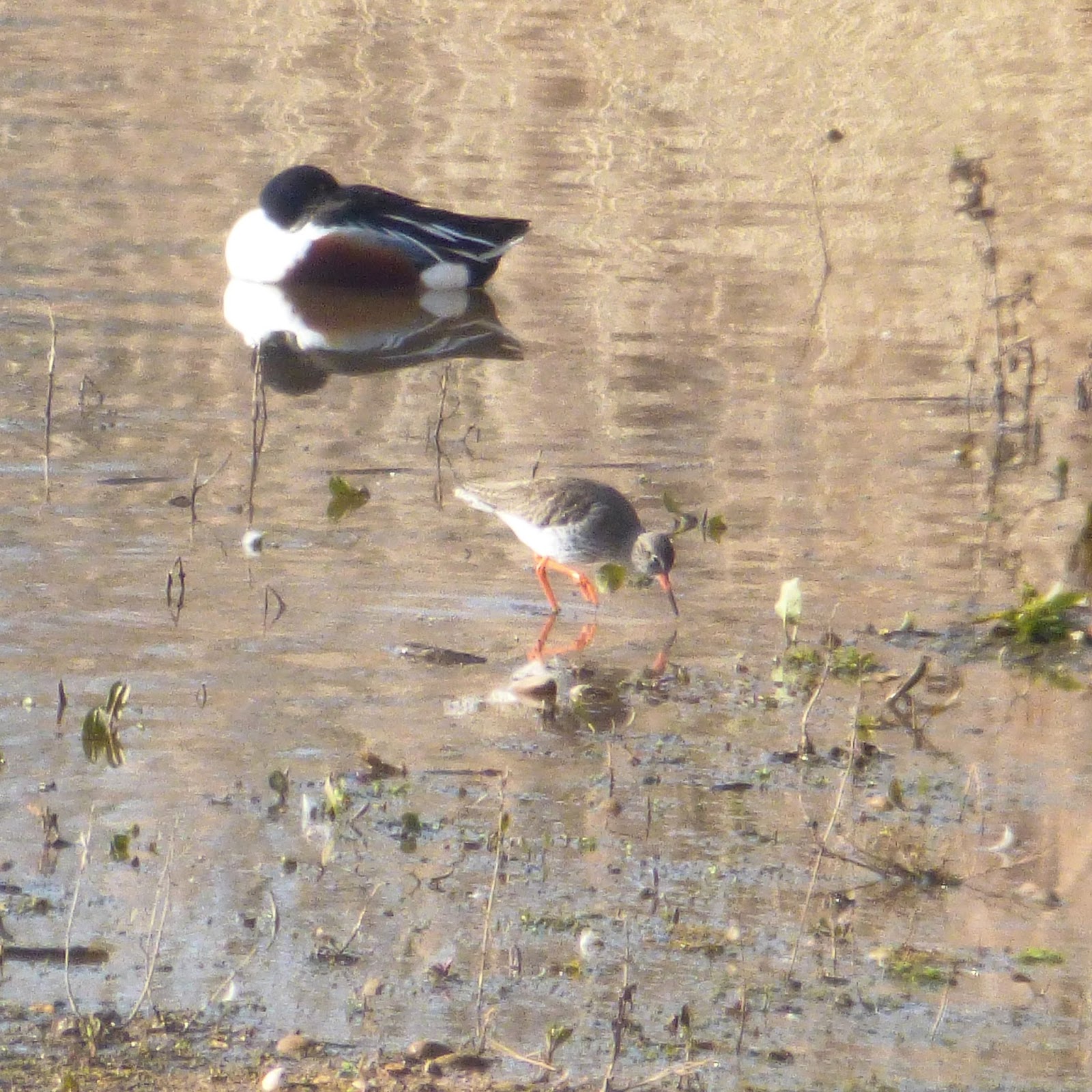
Redshank
Frisky Monday
The old Jack Snipe lagoon
February league table

After a very productive February, March has been a real disaster in terms of new species at Salford Priors. After three weeks of cold biting winds, three days of consecutive visits and the easing of the weather we now see spring migration picking up pace.

Saturday saw me finally catch up with the Redshank that has been playing a very good game of hide and seek with me. I first saw the bird on Pophills with a Green Sandpiper but it is also using the main pit. At the bottom of the reserve the first migrant Chiffchaff was singing, an additional two birds could be heard on Monday. Four Wigeon, probably from Abbots Salford, were around for most of the day.

Sunday looked liked a good day with clear skies but the passage seemed to be going on way above the pits. Wildfowl numbers included 46 Teal, 12 Gadwall and 10 Shoveler.  The Water Rail was again by the reeds on the main pit. 

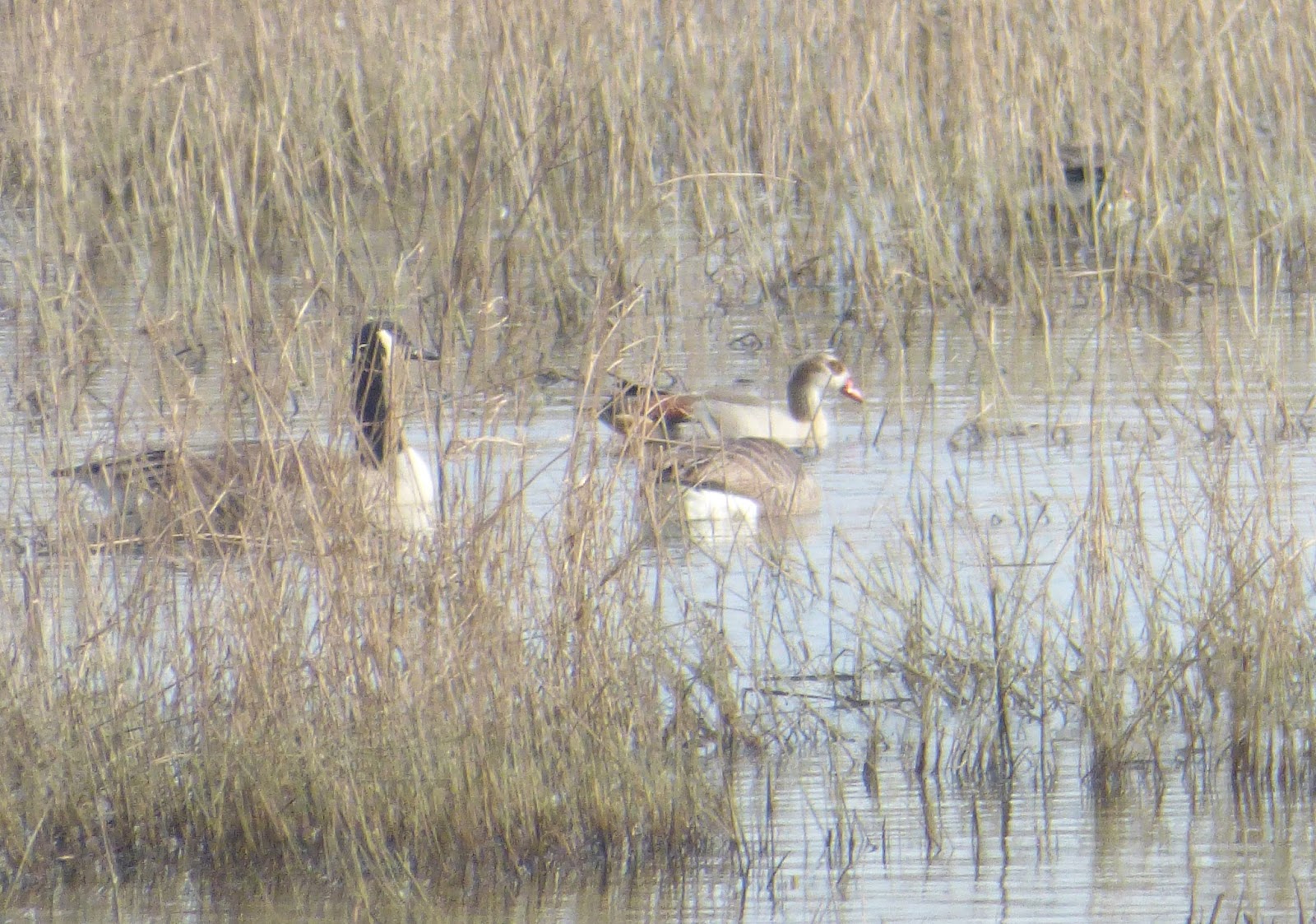
I had two trips on Monday as Paul (The Alcester Squire) was on the main pit when a pair of Mandarin ducks flew in. Patch gold of the highest order. I couldn't stuff my sandwich quick enough ! The Mandarins kindly hung around for my arrival, its a first for me on the site although I've seen one at Abbots Salford. Just as I was snapping the Mandarins our first Little Ringed Plover landed, just brilliant. Having looked at sightings it could well be the first returning bird to Warwickshire.

Monday, 14 March 2016

Go slow Spring

 Searching in vain at the pits
 Roe Deer
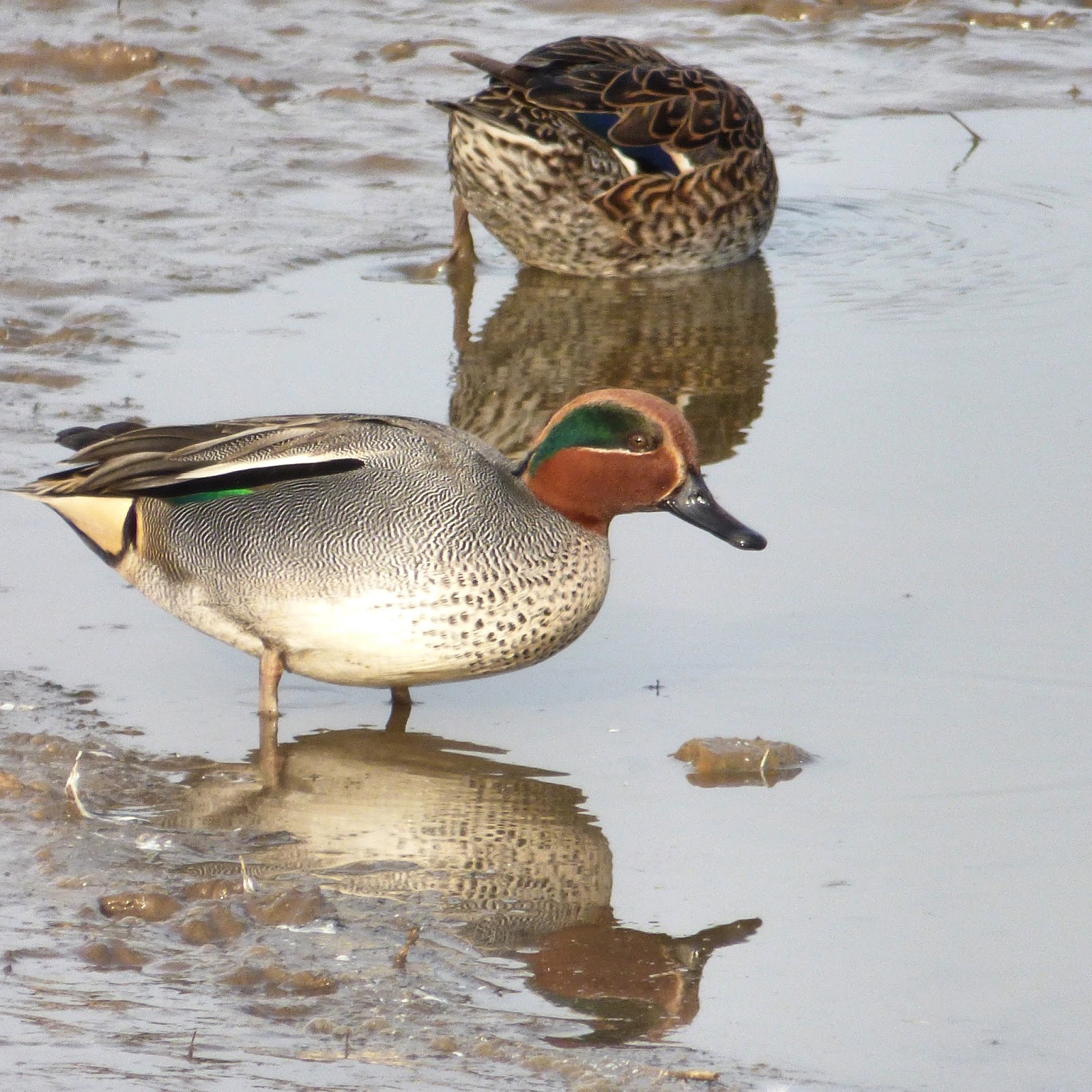
 Stunning Eurasian Teal
 Returning Avocet
 Dunnock
Avocet

Two patch visits to Salford Priors resulted in very poor return this weekend. Whilst the skies were clear there was still a cold biting wind. Scanning high I could see some movement but nothing I could pick out other than Buzzards. The Midlands had suffered flooding midweek which resulted in water levels rising. Chris Lane found a Little Egret on the field flash near Broom on Thursday.

I recorded 55 species during Sundays visit which highlights included 4 Green Sandpipers, 2 Oystercatcher,  2 Shelduck, 11 Gadwall, 39 Teal,10 Shoveler and 3 Teal. The Skylarks were in singing over their territories whilst both Chiffchaffs recorded were wintering ones. Ann & Noel had seen and heard a Curlew during their visit which was the first record of the year.

After returning home for a quick lunch I headed over to Upton Warren to see the returning Avocets. Six were showing well. Over 20 had been recorded this year and they are always great to watch as they sweep the water for insects. My third Grey Wagtail fed in the channels to the right of the hide.  

Tuesday, 1 March 2016

Ladywalk Nature reserve big treble

After the normal morning at Salford Priors the wife and I headed over to Ladywalk Nature Reserve hoping to see one of the resident Bitterns. On our walk down to the new gated entrance four regulars were watching the Siberian Chiffchaff keeping the company of three regular Chiffchaff. 

The wife had never seen a Bittern before and despite my pessimism the Bittern appeared on the left edge of the channel and seemed to be almost watching us. The photograph taken was about the best view we got of the bird in the open before we watched the bird feeding in the reeds. 

As we walked around towards the Bittern hide a Short-eared Owl flew east on the opposite side of the river. The views were brief however it was another first for me at Ladywalk. As we continued on our circular walk we observed up to 9 Gossander, Gadwall, Teal and Tufted Duck on the river.

Frost bite was then taking hold so we headed back to the car when the heater was on full blasting at our feet as we joined the M42. 


Sunday, 28 February 2016

Final days of February at pits


 Siskin
  Siskin
 Wigeon
Great Crested Grebe
 Afternoon flock of Black heads
 Common Gull
 Fallow Deer
  Fallow Deer

As February drew to an end the patch year list had grown to 92 species (97 points) with 10 species added. This weeks additions were a male Mandarin, Kingfisher & Great Crested Grebe on Monday at Abbots Salford. In addition there was a flock of 300+ Black-headed Gulls and seven Common Gulls in a pre-roost whilst wildfowl included six Wigeon and 30 Pochard.

Back at Salford Priors the bird of the week was definitely the Sparrowhawk. I've had fantastic views throughout the week including one brilliant view when I followed a female hunting up a lane to catch a Blackbird and then to see the Blackbird fightback in a hedge to force an escape, probably with a bad headache !

A pair of Oystercatcher are looking for possible nest sites around the pits whilst there looks to be two pairs Shelduck doing the same.

Species still outstanding for the year are Dunlin, Curlew, Common Sandpiper, Stonechat, Little Ringed Plover and Redshank. 

Corsham Hooded Meganser

Hooded Meganser
 Eygptian Goose
 Tucked up Green-winged Teal
 Nuthatch

After a month of birding solely around the patch I broke ranks on Saturday to see the reported female Hooded Merganser at Corsham Lake, Wiltshire. In all likelihood the bird is an escapee however there was enough evidence to suggest perhaps it may just be a vagrant (worth a chance).

During my visit the bird kept it's distance from the bird watchers (however reports on Friday suggested it was opposite to this), the birds wings looked unclipped & in good condition and finally the bird was unringed. 

To add further intrigue to the the birds origin, on Sunday the bird could not be found. Most definitely one for the rarities committee.

On the way home I stopped at a super site I'd never visited before called Ashleworth in Gloucestershire. A dozen birders were there watching a Green-winged Teal who was (in the main sleeping) on a small island. Other sightings included Pintails, Wigeon, Shoveller & a Egyptian Goose. 

Monday, 22 February 2016

Future of Salford Priors Gravel Pits / Marsh Farm

Our regular Peregrine 
Main pit Summer 2015
The local area superstars

Restoration now in full swing including removal of bunds
The reed bed lagoon looking superb is is its last days

Salford Priors Gravel Pits, also known as Marsh Farm, will be restored for agricultural use as per the original planning document written many years ago. Wildlife has blossomed at the site since it was mothballed however many of the great areas of habitat will no longer be there by the end of 2016 and the restoration is now on a tight project plan. The land remains in the ownership of Ragley Estates so there is very little that can be done to preserve these areas.

West Midlands Bird Club would have been very interested in securing the site on a long term lease from Ragley sadly they were not interested in sitting down to discuss options. I must thank Jim Winsper for his superb efforts. 

Given this I continued in my efforts with RSPB's head of Business Conservation Partnerships, Sam Tarrant to arrange a meeting with the key interested parties to ensure CEMEX understand the importance of some areas for the Turtle Dove after an area was ruined in previous months. 

We initiated a meeting at The Broom Tavern with Sam Tarrant & Jenny Oldroyd from RSPB, two representatives from CEMEX including restoration manager, Jim Winsper (West Midlands Bird Club), Biodiversity Manager from Warwickshire County Council, Jon Bowley, Chris Lane and myself.

When land is restored from gravel pits, land returned for wildlife if generally around 10%, this scheme is around 15% so given this and the land ownership problem the below points are probably the best we could have hoped for.

Turtle Dove habitat to be protected as discussed in the meeting. TD forage mix to be sewn in key areas to support the species for next five years.

Water pits to remain are both south pits, central east and the main pit. All other areas will be restored for agricultural use. 

CEMEX will make every effort to install a Sand Martin bank on the Western boundary near the old working & main pit.

All bunds will be removed.

The old right of way patch will be re-installed when the restoration is completed.

CEMEX and RSPB couldn't have been more helpful and listened to every request although there was limited scope of what they could pursue. It is hoped given time we can establish a working arrangement with Ragley for access so we can continue to record wildlife in this area after CEMEX move away from the site completely in 2021. 

There are plans for future pits in the nearby area that are in the public domain for consultation. Whilst there are many downsides for the villagers if the new pits do go ahead there may be some new habitat created. The areas identified do hold an extensive list of existing species. 

Sunday, 21 February 2016

Goosander, Brambling, Siskin & new access

Mondays single Goosander
Greylag Geese
Abbots Salford
Siskin
Feeding Siskin
Upside down Siskin
Treecreeper
 Long-tailed Tits on the feeders
 Goosander pair
 Two of the seven Shelduck on the frozen main pit
Buzzard over Pophills
January Patch Challenge Midland Table

A very mixed bag of weather this week resulted in our first Goosander appearing on Monday which was followed up by a pair on Tuesday which then hung around all week. Paul and I had our first walk around Abbots Salford after access was granted. The walk around the lakes there is much easier that Salford Priors therefore is ideal as an additional area to survey to the pits. The area has two pools, which are used for fishing, a couple of islands, crops fields, pasture, good hedgerows and a river, so I'm hoping we had record a few additional sightings. Previously I could only record what I've seen from the gate. On the one side of the lake three Siskin showed very well right above us. Two Treecreeper landed is the trees on the river bank. The dodgy local Snow Goose was keeping company of the Canada Geese our only disappointment was we never added Kingfisher or Great Crested Grebe to our patch list. 

Chris Lane found a pair of Brambling on Thursday around the orchards which I managed to relocate. I could not get near enough for a decent photo of the stunning male. Chris also found a Stonechat on the edge of Broom but despite two searches I couldn't relocate. Paul Hands recorded a Grey Partridge towards Abbots Salford which is the third record of the year to date.

Sunday's count included :- Mallard, Coot 65, Tufted Duck 128, Little Grebe 14, Canada Goose 87, Lapwing 19, Gadwall 10, Shoveler 4, Teal 52, Mute Swan 2, Jack Snipe 1, Snipe 10, Cormorant 37, Shelduck 2, Oystercatcher, Greylag 180, Pochard 1, Buzzard 3, Green Sandpiper 3, Meadow Pipit 1, Reed Bunting 4, Pied Wagtail 8, Lesser Black-backed Gull, Black-headed Gull 3, Linnet 12, Starling 5, Jackdaw 30, Rook 15, Sparrowhawk, Song Thursh, Greenfinch 4, Grey Heron 2, Stock Dove 4.