Wednesday, 6 April 2016

Bijilo Forest Park (Day 2)

 Forest Park Entrance
Little Bee-eater
 Green Vervet Monkey
Western Red Colobus Monkey
Grey-backed Camaroptera
Northern Crombec
@buramakeita
Pipiac
 Western Grey Plantain Eater
 Red-billed Hornbill
Beautiful Sunbird
Common Bulbul
 Blue Breasted Kingfisher 
Bronze Manakin

Bijilo Forest Park & Nature Trail (Monkey Park) lies in the coastal zone, next to the beach, about a five minute walk from the hotel. With over 133 bird species recorded there I booked local guide @buramakeita. Burama had been guiding for ten years and without his help I would have really struggled in the thick scrub of the forest. 

On the way to the park we stopped at what looked to be a small hectare of waste land where we picked up a number of great birds including Tawny-flanked Prinia, Grey-headed Sparrow, Red-cheeked Cordon Bleu, Green Wood Hoopoe and Long-tailed Glossy Starling.

The entry fee was 250 Dalsai (£2.20) for both of us. Within our first few seconds inside the park we picked up a Snowy-crowned Robin-chat, Yellow Crowned Gonolek, 
two Oriole Warblers and a Western Red Colobus Monkey.

As the forest opened up I managed to see my first Bee-eaters, first the common Little Bee-eaters then a Swallow tailed Bee-eater. Off shore a Caspian Tern flew north whilst I found it very interesting to watch two Northern Crombec at close quarters. These birds are very similar to our Nuthatches and were formally called Nuthatch Warblers. Another first was the stunning Red-bellied Paradise Flycatcher feeding by a watering station. Two more regular species seen were a Common Kestrel & a Peregrine. We had to work hard to see a Grey-backed Camaroptera to start with but then had extended views at close quarters. Our final bird was an Ahanta Francolin shuffling through the under growth. 

A brilliant session of birding which took my species count up to 51.

Saturday, 2 April 2016

Vulture feeding at the Senegambia (Day 2)

Vultures gather


 Yellow-billed Kite
Long-tailed Glossy Starling 

Considering the reputation of the Senegambia Hotel I must admit I was some what under whelmed on my visits. Located next to our hotel it was easy to walk around the grounds to extend my morning stroll. The hotel was very different to our own, being very busy and far more commercial and lacking any personal touch. 

The daily vulture feeding is well worth seeing as over 100 Hooded Vultures, 50 Yellow-billed Kites and 3 Black Kites gather in the garden to be fed and watered. A local told me that since the hotel had been taken over and more rooms built some of the habitat has been destroyed effecting the birding there. I could only find one species of Starling, whilst apparently four had been present years ago.

Off to the Gambia (Day 1)

Welcome to The Gambia
 Yellow-billed Shrike
Hooded Vulture
Broad-billed Roller
 Speckled Pigeon
 Cattle Egret
Beautiful Sunbird (Female)

With the boys mad sporting schedules our family holidays tend to be more of the short break variety however with a long Easter break on the calendar we opted to visit The Gambia in Western Africa for a weeks holiday. We decided came to Gambia when I simply typed into Google "where is hot in March". From this point the research suggested it could be a great destination as all the reviews looked fantastic. This would be our first visit to Africa. The Gambia has a population of 1.7 million people and sits on the Atlantic coast.

We stayed at the Kariba Hotel which was truly fantastic. Amazing gardens, stunning pool, sports for the lads, great beach, local restaurants, welcoming staff and brilliant accommodation. 

With a bird list over 550 birds in Gambia there was always going to be plenty to do to keep me happy. 

There are three main groups of bird which can be split as follows :-

1) Resident African Breeders
2) Intra-African Seasonal Migrants
3) Palearctic Over-wintering visitors

From the moment the plane landed Hooded Vultures were soaring over head and remained that way during most of our stay. Upon reaching the hotel and taking in the pool, I had a late afternoon walk around the grounds where I recorded species including Cattle Egret, Broad-billed Roller, Pied Crow, Palm Swift, Barn Swallow, Speckled Pigeon, Yellow-billed Shrike, Common Bulbel, Red-eyed Dove, Lesser Honeyguide, Senegal Cougal, Western Grey Plantain-eater, Village Weaver, Beautiful Sunbird, Splendid Sunbird, Brown Babbler, Bronze Mannakin, Little Swift, Grey headed Gull, Yellow-crowned Gonelek and African Thrush. 

I will try and write a short blog about each area I visited and birds seen.

Friday, 1 April 2016

Treble Garganey at Holt


I do love a text from Brian Stretch about a local rarity. It's great to have a base like Salford Priors but I do enjoy having a drive to different locations. After doing the pits I drove over to Holt Fleet to see three Garganey including two drakes. Viewing isn't perfect due to the ground work around the flash but I still managed to get a couple of record shots. Well worth a visit, especially when the drakes woke up to show their stunning head stripe.

Little Ringed Plover & Manadrin fly into Salford Priors

Little Ringed Plover
Patch Gold
Redshank
Frisky Monday
The old Jack Snipe lagoon
February league table

After a very productive February, March has been a real disaster in terms of new species at Salford Priors. After three weeks of cold biting winds, three days of consecutive visits and the easing of the weather we now see spring migration picking up pace.

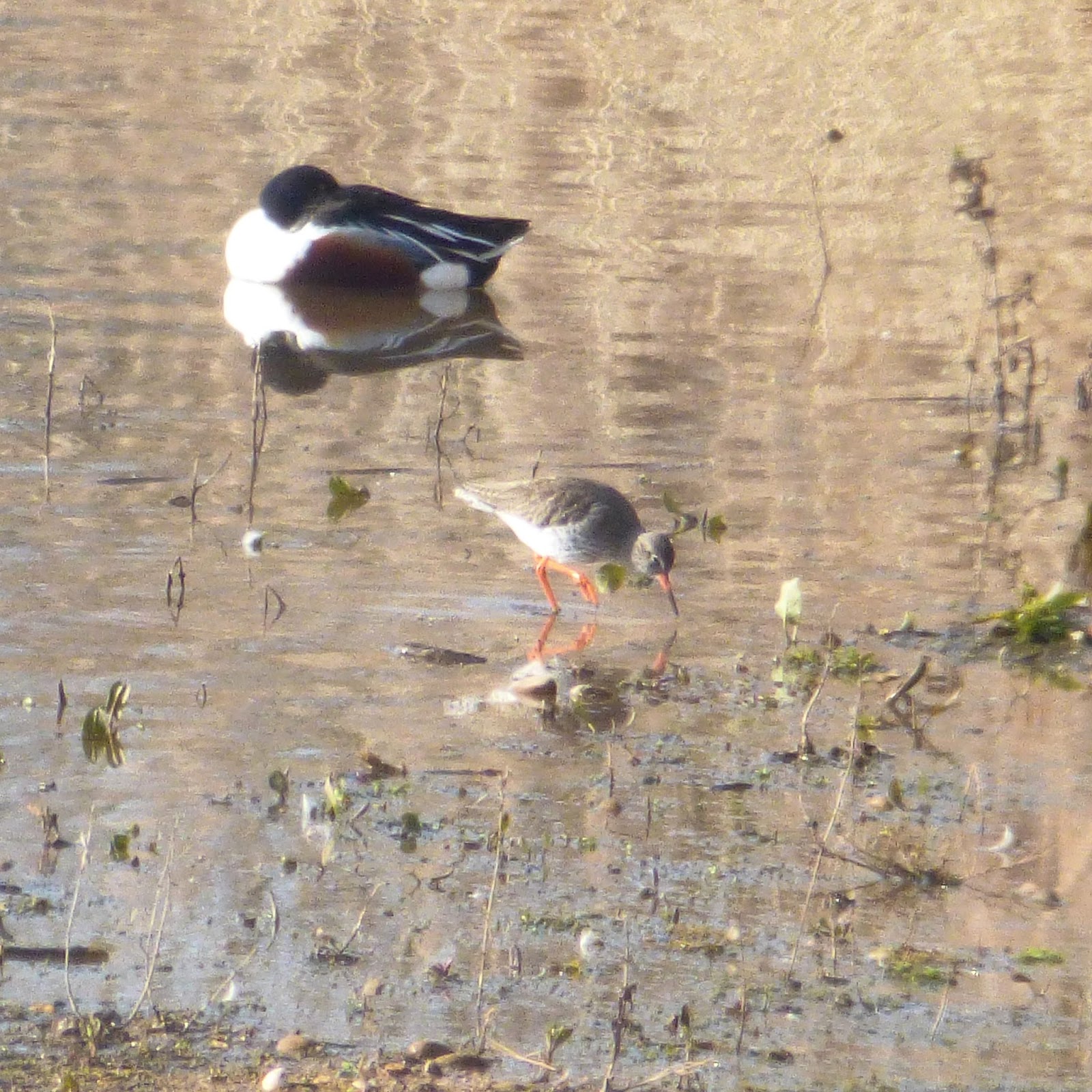
Saturday saw me finally catch up with the Redshank that has been playing a very good game of hide and seek with me. I first saw the bird on Pophills with a Green Sandpiper but it is also using the main pit. At the bottom of the reserve the first migrant Chiffchaff was singing, an additional two birds could be heard on Monday. Four Wigeon, probably from Abbots Salford, were around for most of the day.

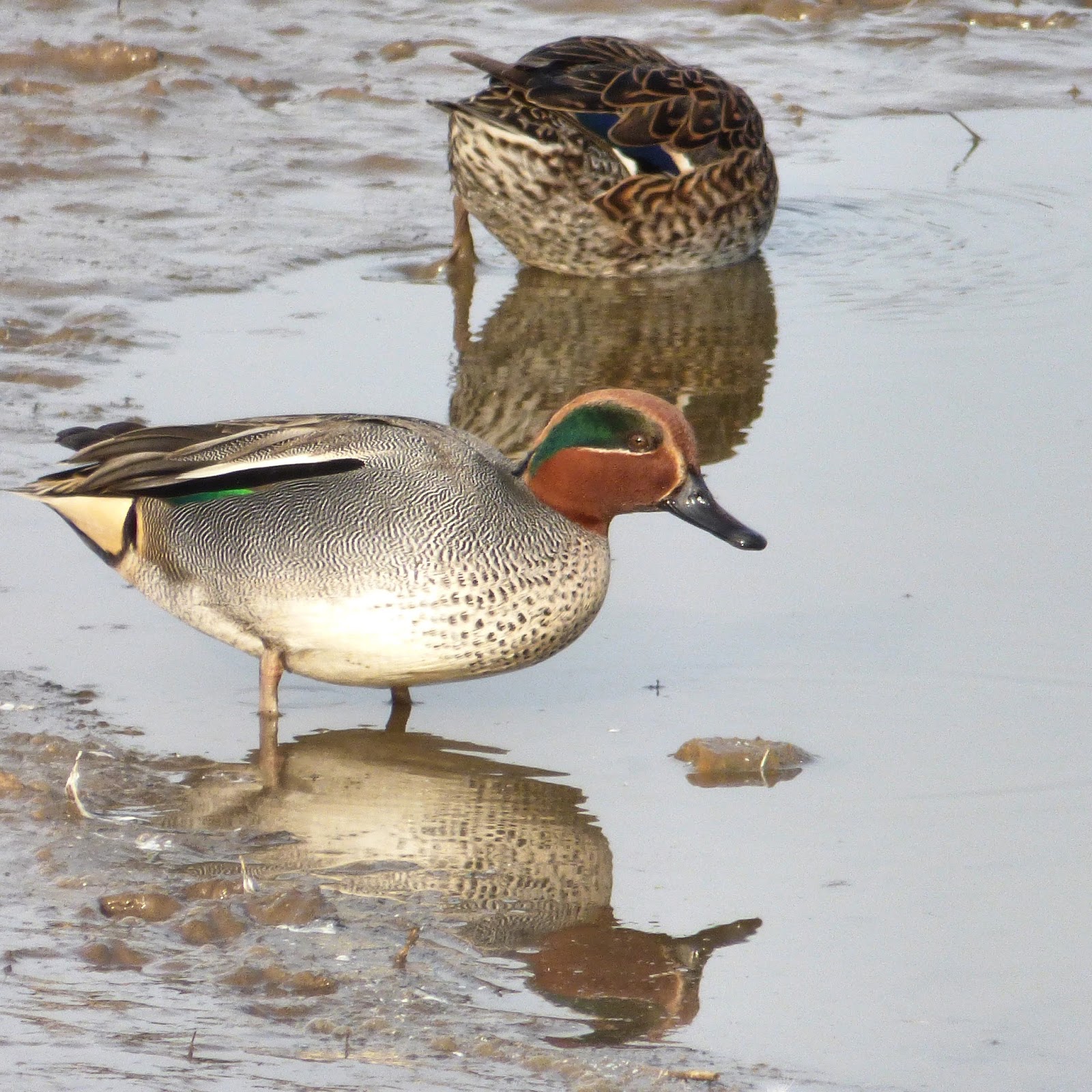
Sunday looked liked a good day with clear skies but the passage seemed to be going on way above the pits. Wildfowl numbers included 46 Teal, 12 Gadwall and 10 Shoveler.  The Water Rail was again by the reeds on the main pit. 

I had two trips on Monday as Paul (The Alcester Squire) was on the main pit when a pair of Mandarin ducks flew in. Patch gold of the highest order. I couldn't stuff my sandwich quick enough ! The Mandarins kindly hung around for my arrival, its a first for me on the site although I've seen one at Abbots Salford. Just as I was snapping the Mandarins our first Little Ringed Plover landed, just brilliant. Having looked at sightings it could well be the first returning bird to Warwickshire.

Monday, 14 March 2016

Go slow Spring

 Searching in vain at the pits
 Roe Deer
 Stunning Eurasian Teal
 Returning Avocet
 Dunnock
Avocet

Two patch visits to Salford Priors resulted in very poor return this weekend. Whilst the skies were clear there was still a cold biting wind. Scanning high I could see some movement but nothing I could pick out other than Buzzards. The Midlands had suffered flooding midweek which resulted in water levels rising. Chris Lane found a Little Egret on the field flash near Broom on Thursday.

I recorded 55 species during Sundays visit which highlights included 4 Green Sandpipers, 2 Oystercatcher,  2 Shelduck, 11 Gadwall, 39 Teal,10 Shoveler and 3 Teal. The Skylarks were in singing over their territories whilst both Chiffchaffs recorded were wintering ones. Ann & Noel had seen and heard a Curlew during their visit which was the first record of the year.

After returning home for a quick lunch I headed over to Upton Warren to see the returning Avocets. Six were showing well. Over 20 had been recorded this year and they are always great to watch as they sweep the water for insects. My third Grey Wagtail fed in the channels to the right of the hide.  

Tuesday, 1 March 2016

Ladywalk Nature reserve big treble

After the normal morning at Salford Priors the wife and I headed over to Ladywalk Nature Reserve hoping to see one of the resident Bitterns. On our walk down to the new gated entrance four regulars were watching the Siberian Chiffchaff keeping the company of three regular Chiffchaff. 

The wife had never seen a Bittern before and despite my pessimism the Bittern appeared on the left edge of the channel and seemed to be almost watching us. The photograph taken was about the best view we got of the bird in the open before we watched the bird feeding in the reeds. 

As we walked around towards the Bittern hide a Short-eared Owl flew east on the opposite side of the river. The views were brief however it was another first for me at Ladywalk. As we continued on our circular walk we observed up to 9 Gossander, Gadwall, Teal and Tufted Duck on the river.

Frost bite was then taking hold so we headed back to the car when the heater was on full blasting at our feet as we joined the M42.