Sunday, 26 June 2016

Brufut Woods (Day 7 Gambia) & appeal

Brufut Woods had plenty of birds whatever your interest
Pearl-spotted Owled
Little Bee-eater
African Green Parrot
African Scops Owl
Fine-spotted Woodpecker
Yellow-fronted Tinkerbird
Beautiful Sunbird
Ebrima trying to find another species
Verreuxs Eagle Owl
White-faced Scops Owl
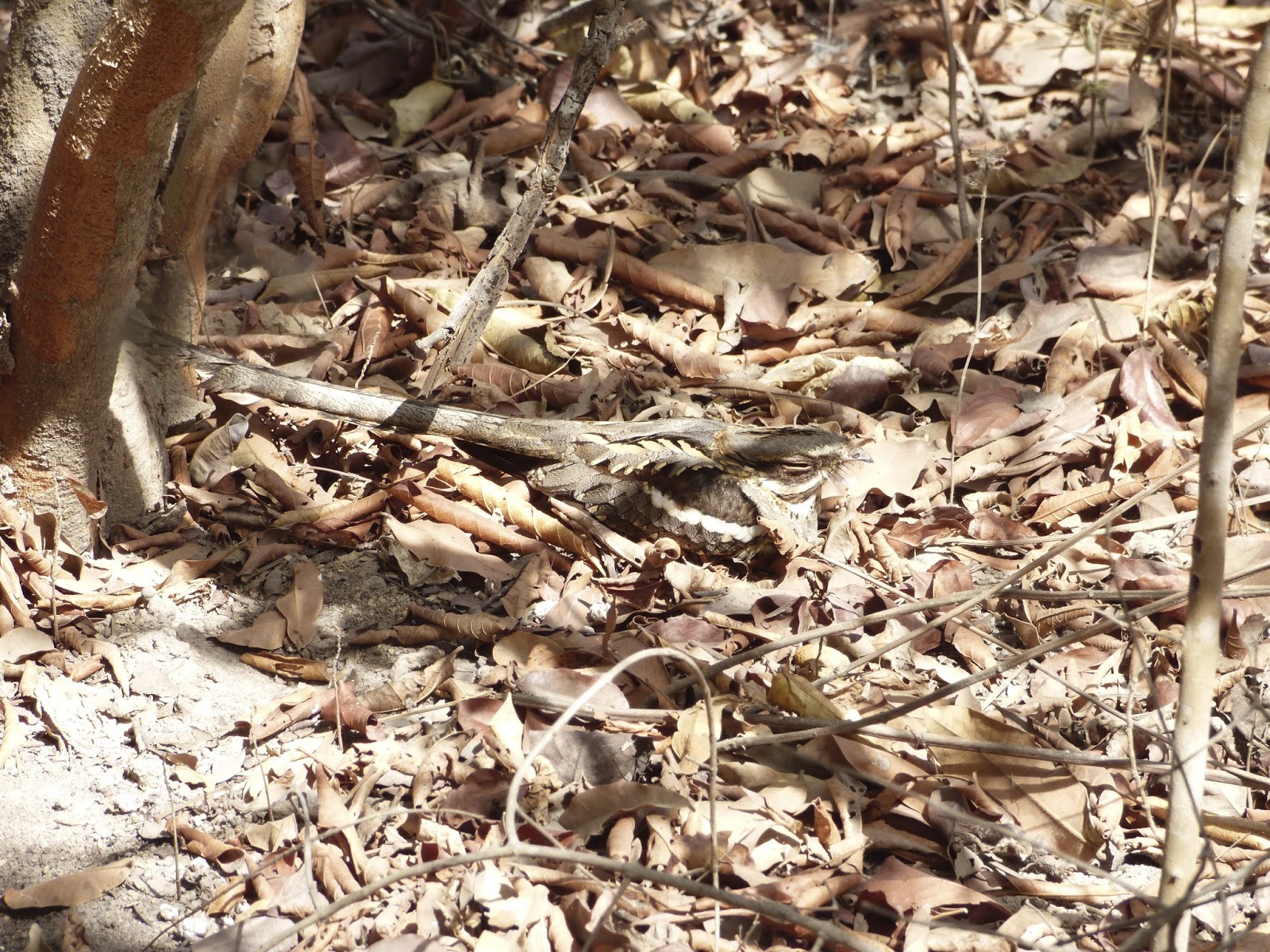
Long-tailed Nightjar
Welcome to Gambia
Cardinal Woodpecker
Woodland Bar

I've just realised I hadn't posted my final blog from the Gambia.  I was very happy of the birding I'd already done during the holiday however Brufut Woods with it's reported Owls was still an attraction. As I was walking across the square a polite guide called Ebrima stopped me for a chat and said he had seen me on twitter and wondered if I had time for any more birding. After a bit of negotiation we agreed to visit the wood the following morning, using my own local transport & Ebrima to guide around the site. Give Ebrima a follow on Twitter at @gambianbirder  .

The Woods were about 40 minutes away to the south which would have been very difficult to find without a guide. The woods were dense scrub land and forest throughout and are protected by West Africa Bird Study Association. On our walk we were also joined by a local ranger who is a long term friend of Ebrima.

Within a few yards I recorded my first new bird a African Green Parrot sitting up before seeing a Africa Harrier Hawk, Skira followed by four species of Owl including African Scops Owl, Pearl Spotted Owlett, White-faced Scops Owl & the impressive Verreuxs Eagle Owl.

I was very impressed with Ebrima's knowledge of the birds habits, calls as well as knowing all their latin names. Ebrima went out of his way to try and find exactly what I wanted to see. Two Woodpeckers I was desperate to see were Fine-spotted & Cardinal Woodpecker. The Cardinal took us a bit longer but with some careful listening we saw a pair very well.

Ebrima had another real treat for me as he put me within a metre of a male & female Long-tailed Nightjar. Hidden within the camouflage of the forest floor it took a couple of seconds to adjust the eye to see this Gambian superstar bird.

Other species recorded included Pin-tailed Whydah, Village Indiobird, African Paradise Flycatcher, Orange-cheeked Waxbill, Yellow-fronted Canary, Copper Sunbird, Yellow-fronted Leaflove, Singing Cisticola, Red Bishop & a Plantive Cisticola.

After a stunning morning we all retreated to the the woodland bar where we chilled with an ice cold drink before heading back to the hotel.

My trip ended seeing a fantastic 155 species in just seven days. We all had a fantastic holiday of a lifeline and met some truly amazing people.


On a very sad note we received word last week our good friend and gambian guide Moses died suddenly. Moses was one of the nicest and genuine people we have all met and we had the pleasure of visiting him & his family in their shared compound. Justine Passey, who introduced to Moses, is trying to raise £2,000 to build a home for his wife & five year old son Little Mo to enable them to try and rebuild their life in a safe environment. A crowd-funding page has been set up to help.

His outlook was to provide a better life for his wife and son so that they could move from their compound. He bought a plot of land and his dream was to build their own house! He put his son into school to better his education but now, all of that will be lost and survival is an unknown. These people have nothing yet they openly share what they have and never stop smiling, their hearts are huge and something we should all learn from.
Moses had plans for his dream house and the costings to build it which is only £2000.00, so Justine decided to put it out there to you all and to ask if anyone is prepared to donate £10.00 (or more at your discretion) - if this is something you feel you can help us with we'd be truly grateful so that we can ensure the safe wellbeing of Moses family following his sad passing. If any can help this would be truly amazing. 

Message from Justine -This has been done from my heart to put it out there to you all to see if you can help this one family to survive, trust me they do deserve it so if you can find it in your heart to help I thank you in advance from the bottom of my heart! Let's change someone's life together- Thank you ❤️X

Thursday, 23 June 2016

Bits & pieces weekend

Quail potential
Grey Heron
Coot numbers increasing weekly
Cheeky fox cub
Banded Demoiselle (Male)
Specked Wood
Meadow Brown
Common Blue

It was pretty much business as usual at Salford Priors. After a few weeks of the water level dropping, some very heavy downpours have seen the levels rise to winter levels around the site. The site has always looked perfect to record Quail so I've been trying all the fields within the patch boundary but no luck to date.

A Common Tern appeared early on Sunday morning but moved on after a quick lap of the main pit. Two Green Sandpipers were on Pophills and were then seen on the main pit later in the day. Three Little Ringed Plovers are still around site but don't appear to be nesting. Two Oystercatchers can continue to be observed but don't appear to be settled.  Raptors are limited to Kestrel, Buzzard and Sparrowhawk.

Big weekend continues with Broad-billed Sandpiper at Newport Wetlands

Broad-billed Sandpiper (left)
Broad-billed Sandpiper (left side on)
Comparision with Dunlin
File image
Little Egret
Wood Sandpiper
         

At the end of an epic day in Norfolk last Friday, Roland (Major of Warwick) predicted the weekend northerly winds would blow the reported Broad-billed Sandpiper to Slimbridge ready for a morning visit. I could hardly believe my text alert the following morning saying "How right was I about the Broad-billed Sandpiper?" I quickly finished off the patch before assessing the chances of success given the bird was actually in Newport & not Slimbridge. Ptttttttttt, needs to improve accuracy of those predictions.

Roland didn't need much convincing however we knew the time gap would be limited as the birds stay would depend on the tide. Thankfully I'd been to Goldcliff Pools before so we made the journey in quick time. The M50 is certainly one of the nicest motorways to drive down in the UK. 

On arrival, we shuffled as quickly as hernia's would cope with before making the viewing platform where we could be our bogey bird the Broad-billed Sandpiper. These Sandpipers are traditionally seen mostly on the east cost and do move on with tide so very difficult for us midland birders to see. These birds breed up in the taiga and winter in east africa or south Asia. 

The bird fed on the other side of the lagoon island with a small Dunlin flock but could be easily picked out with the scope. The birds bill was very distinctive being longer & straighter than the Dunlin but having an downward kink on the tip. My images are quite distant so I've also added a file photo which then enables you to see the bird better on my shots.

Whilst on site it was good to witness my first Wood Sandpiper of the year, a Greenshank, plenty of Redshank & Little Egrets. Another top morning out allowing me to get home to watch the cricket at Feckenham & Roland time to do his list of chores.

Shelduck breed again at Salford Priors GP

Six ducklings
There is always one
Without a care in the world
Rabbit in evening sunshine

Our hopes of having breeding Shelduck at Salford Priors again were realised on Monday when a brood of six emerged on the reed lagoon. Many thanks to Andy Woodhouse who called me following a morning visit on Monday.

As soon as I finished work I was on site and sludging through the mud down to see our new arrivals. The six ducklings were swimming with the mother on the edge of the reeds clealry enjoying some rare Warwickshire June sunshine. One of the ducklings certainly didn't lack confidence and was seen following his own agenda of exploring the lagoon.

Other additional sightings of note were two Green Sandpipers, a Lapwing & a Little Ringed Plover. 

Sunday, 19 June 2016

Great Knot MEGA twitch to Titchwell

Great Knot
A not so Great Knot hiding
The flock take flight
Twitchers delight
Hard to estimate the number of birders who have connected
Flock close up
Black-tailed Godwits
Avocet
Stone Curlew
        

As Wednesdays go, last week was very much as normal until I pressed my RBA app to see the alert reading GREAT KNOT TITCHWELL ! I was only reading the monthy copy of Bird Watching magazine the previous night where they had predicted this bird.

I wouldn't like to estimate how many texts and phone calls were made around the country all saying the same. Have you seen news ? are we going ? if so when ? I'm certainly not a fan of first day twitches so I held fire until Friday as I also wanted to avoid the Saturday twitchers. 

Our tactics were to wait for early morning news and then GO GO GO. Postive news emerged at 6.15am so I was quickly out and on the way to pick up the Warwick Mayor Roland and we made great progress to Norfolk as traffic was very kind. 

As soon as we landed, at a very full Titchell car park, we were marching towards the beach to see a captive auidance focused on a flock of around 200 Knot. There in front of us feeding was Britains fifth Great Knot. A trully mega bird in terms of its rarity but perhaps not in it's beauty.

This north-east Siberian breeder appeared slightly bigger than regular Knots on show, but it was quite distinctive in it's summer plumage. The plummage was in fact similar to a Turstone.  There were many very happy birders and listers coming to and from the reserve unfortnuatley a few did miss out in the afternoon as the flock flew east towards Scolt Head Island.
The reserve was fairly quiet in the morning but we needed stop in to see the regular species of Red-crest Pochard, Black-tailed Godwits, Teal, Avocet and Marsh Harrier. We did get some nice views of a Bar-tailed Godwit in the sea when on the beach. As is now customary we bought a Norfolk pasty that we munched outside the very busy cafe.
On the return jouney we called in at Weeting Heath to see the Stone Curlews with young and a Woodlark wrapped up a cracking day out. 

“Something about?”

Thursday, 16 June 2016

Spotted Flycatcher becomes pit addition


I undertook two site visits at the weekend with mixed results. Highlight of the weekend was a shy Spotted Flycatcher that was showing on and off on the edge of the plantation. Viewing was very difficult during the afternoon due to the very heavy showers. Another great find by Jon.

More spring broods can be seen around the site including 10 Greylag goslings, a full grown Little Grebe, five Canada Geese and 8 Mallards. In addition our pair of Treecreepers have successfully raised a brood in the plantation. We are really hoping for a brood of Shelduck but it’s very difficult to assess the current situation.

Wader sightings included (over both days) three Little Ringed Plover, a Dunlin, a Green Sandpiper and two Oystercatcher.

Additional sightings included 17 Little Grebe, 3 Cormorant, 4 Grey Heron,  13 Mute Swans, 8 Greylags, 66 Canada Geese, 116 Mallard, 2 Shoveller, 56 Tufted Duck, 133 Coot, 9 Lesser Black-backed Gulls, 1 Herring Gull, a Common Tern, 80 Swifts, 50 House Martin, 2 Sand Martin, 15 Swallows, 6 pairs of Meadow Pipit, Yellow Wagtail.

Our two patch fox cubs are growing up fast whilst other mammals including a Roe Deer and eight Brown Hares. The first Bee Orchids were in flower around the pits.

Tuesday, 14 June 2016

White Stork at Steart Mashes

White Stork
Superb White Stoke
Welcome to Steart
Just behind the ear
Ready for take off
Stork in flight

Inside the hide
Reserve map
Little Ringed Plover
Peregrine watching down from the pylon
One of the superb hides

 Video clip taken with bridge camera

White Storks have been a real blocker on the life list of British birds as every time they appear they are always out of reach. I noticed late on Friday a bird was reported at Steart Marshes in Somerset. I'd been wanting to visit Steart for a good while so I decided if the bird was reported on Saturday morning I'd give it a go. Sadly no early report so I did my normal early shift at the gravel pits.

A confirmed sighting came up on RBA just before 10am and so I headed south and made good progress despite some poor weather and plenty of traffic. The reserve was well sign posted and I was very pleased to find clean toilet facilities on the car park.

Steart is part of a wetland habitat created with £21m of public money that opened along the Somerset coast. The reserve was created after the Environment Agency flooded about 400 hectares (988 acres) of the Steart Peninsula, near Bridgwater and built flood defences for nearby homes. The new habitat is owned by the Environment Agency and is being managed by the Wildfowl and Wetlands Trust (WWT) it has around 13km of paths as well as some superb modern hides and viewpoints.

Steart Marshes is WWT's first big Working Wetland. It's home to a vast array of wildlife and it's a place that people love to visit. But as well as that, it's 'locking' away carbon from the atmosphere that would otherwise contribute to climate change. The development of new saltmarsh is a rare opportunity so WWT is supporting academic research to measure how much carbon is absorbed. Steart Marshes was once arable farmland and it continues to be farmed with livestock by local graziers who are able to market saltmarsh lamb and beef for a premium because its flavour is valued by food lovers. The tidal creeks that run across Steart Marshes shelter fish fry. The fish attract herons and egrets but they are also from commercially important species such as sea bass.  Another feature of the site is that waste water from the public loos goes through a treatment wetland, a more natural way to treat waste and itself creates additional habitats for wildlife

The White Stork is very common in the Mediterranean where thousand's migrate over the Straits of Gibraltar to breed in towns and cities of Spain, France, Portugal, Switzerland, Poland, Germany and stretching across to their stronghold in Eastern Europe.

With climate change you have to wonder if White Storks will be added to the breeding species list here in the UK like Little Bittern, Little Egret, Great White Egret, Common Cranes however it is hard to estimate how many birds are actually genuine wild birds due to a high number of escapees.

This Crane looked to be an immature bird that had most likely overshot Spain on it's migration. I'd never seen one before however the bill appeared a dull red without a dark tip.  The bird walked slowly and gracefully towards the lookout giving the small audience some super views. After around thirty minutes the bird took flight harassed by a Grey Heron & a Buzzard. As the bird rose it looked like it was heading off east but after a number of graceful circles showing its long neck and wingspan the bird returned to marsh but much further back.

From the same view point there were two Little Ringed Plovers, many Shelducks, Grey Herons, Oystercatcher, Peregrine and a Heron.