Friday, 19 February 2016

Ladywalk Bittern


Eurasian Bitterns are one of the most fascinating birds that lives and breeds in the UK, yet their secretive nature makes prolonged views of the species extremely difficult. Not feeling in great spirits I decided to try my luck and do a lap of Ladywalk Nature Reserve. 

On arrival I saw three regular Chiffchaffs and what looked to be the Siberian Chiffchaff about fifty yards in front of the gated entrance. To be fair I was more interested to trying to see one the sites possible three Bitterns. 

I joined three other regular members in the B hide who were very welcoming. All three were staring at the reeds watching the Bittern. Despite only being 20-30 feet away it was very difficult to see the bird until you actually found it. Then the views were brilliant. You could see how the Bitterns camouflage would be a tremendous asset for the bird.

I was able to watch the bird feed on fish and invertebrates right in the middle of the reeds through my binoculars for around 40 minutes around 1pm. On occasions the bird would lie down flat with its break in the water waiting for its prey. It was an amazing sight. The bird did creep right and through a small channel which enabled me to grab a few shots with the bridge camera.

If you fancy going to see the wonderful Bitterns for yourself please remember Ladywalk NR is part of West Midlands Bird Club and if you are not a member a permit is required. 

Thursday, 18 February 2016

Review & Final Patch Challenge Standings of 2015

Final Table
 Bird of the year - Pectoral Sandpiper
Patch star species

Apologies, I thought I'd published this a month ago. A very honourable 7th (joint 6th) for my efforts on the Midlands Patch Challenge in 2015. I managed to record 130 species out of the 139 recorded in the recording area.

The year started well with a Scaup present until 4th January. A wintering Common Sandpiper was present throughout the month whilst a count of 15 Jack Snipe was the highest in the county. A peak of 10,000 Wood Pigeons was recorded in February whilst up to 6 Water Rail were present in south reed bed. Two different Peregrines were recorded and a Merlin was seen hunting a number of times. 


March brought the arrival of Little Ringed Plovers which successfully bred, Ringed Plover, Dunlin and a Stonechat when there was movement throughout the county. 


Five Avocets were the April highlight with other notable sightings including Goosander, two Hobby (from 16th),Whimbrel (19th), Redshank, Yellow-legged Gull, Common Tern, Cuckoo, Common Redstart, three Wheatear, Cetti’s Warbler and 11 Yellow and two White Wagtails. 


A Pectoral Sandpiper found on the 31st May to claim bird of the year honours. This was to be the 191st species recorded at the site. A Marsh Harrier flew south on May's all day Warwickshire bird race competition. Little Egret made appearances throughout the month whilst two Red Kites drifted across from Bredon Hill.  More migrants were observed including Hobby, Sanderling, four Arctic Terns, two Turtle Doves, Cuckoo, 500-1000 Swifts, 600 House Martins and several Yellow Wagtails.


The regular pair of Shelduck revealed a brood of nine of which all successfully left the area. Eight Little Ringed Plovers were noted and a Grey Partridge was a welcome observation.


A juvenile Garganey were the star attraction in July with other key sighting included an Avocet and a Little Stint.


August proved to be the best month of year for the area with a stream of great birds using the pits as a welcome stop on migration. A second Garganey was present until the to 24th, whilst waders included four Little Ringed Plover, nine Ringed Plover, five Dunlin, Little Stint (23rd), Snipe, four Black-tailed Godwit, two Ruff, Spotted Redshank (30th), 11 Green Sandpiper, Wood Sandpiper (16th), eight Common Sandpiper and two Turnstone. Four Black Tern, thought to be a first for the site, was a superb record whilst a Mediterranean Gull (10th) was a rare find. Other sightings included Yellow-legged Gull, seven Common Terns, five Turtle Dove, two Common Redstart, Whinchat, two Wheatear, Grasshopper Warbler, Tree Pipit and several Crossbills.


Three Turtle Dove chicks successfully fledged and were seen around the area before their migration south.


Wintering wildfowl returned in September including two Pintail, eight Wigeon whilst 51 Teal highlighted the lack of the suitable habitat. Four Winchat were present with two Stonechats. 


A Bearded Tit was discovered on the 18th October whilst other monthly highlights included 18 Wigeon, two Pintail, eight Shoveler, Water Rail, Ringed Plover, Golden Plover, 95 Lapwing, 32 Snipe, four Green Sandpiper, Dunlin, two Yellow-legged Gulls, Short-eared Owl (22nd), 300 Meadow Pipits, Tree Pipit, White Wagtail, four Stonechats, two Wheatears, a late Reed Warbler (4th), 25 Lesser Redpolls and a Corn Bunting.


November saw yet more finds included two Red-crested Pochard, a Rock Pipit, Stonechat and a Brambling. Three Whooper Swans were also recorded flying over Bidford (9th).


The year closed with a Pink-footed Goose found on the 28th whilst a Lesser Spotted Woodpecker was reported at nearby Dunnington and four Grey Partridges were at Bidford-on-Avon.


The site has some very challenging times ahead with restoration being accelerated and a number of key habitats being destroyed. Habitat and access remain a major concern for 2016. 


Many thanks to Jon Bowley, Paul Hands, Anne & Noel, Mark Islip, Chris Lane, Lee Taylor and Mike Inskip.  


Morning at Ladywalk NR


Ladywalk Nature Reserve
Tufted Duck
Shelduck
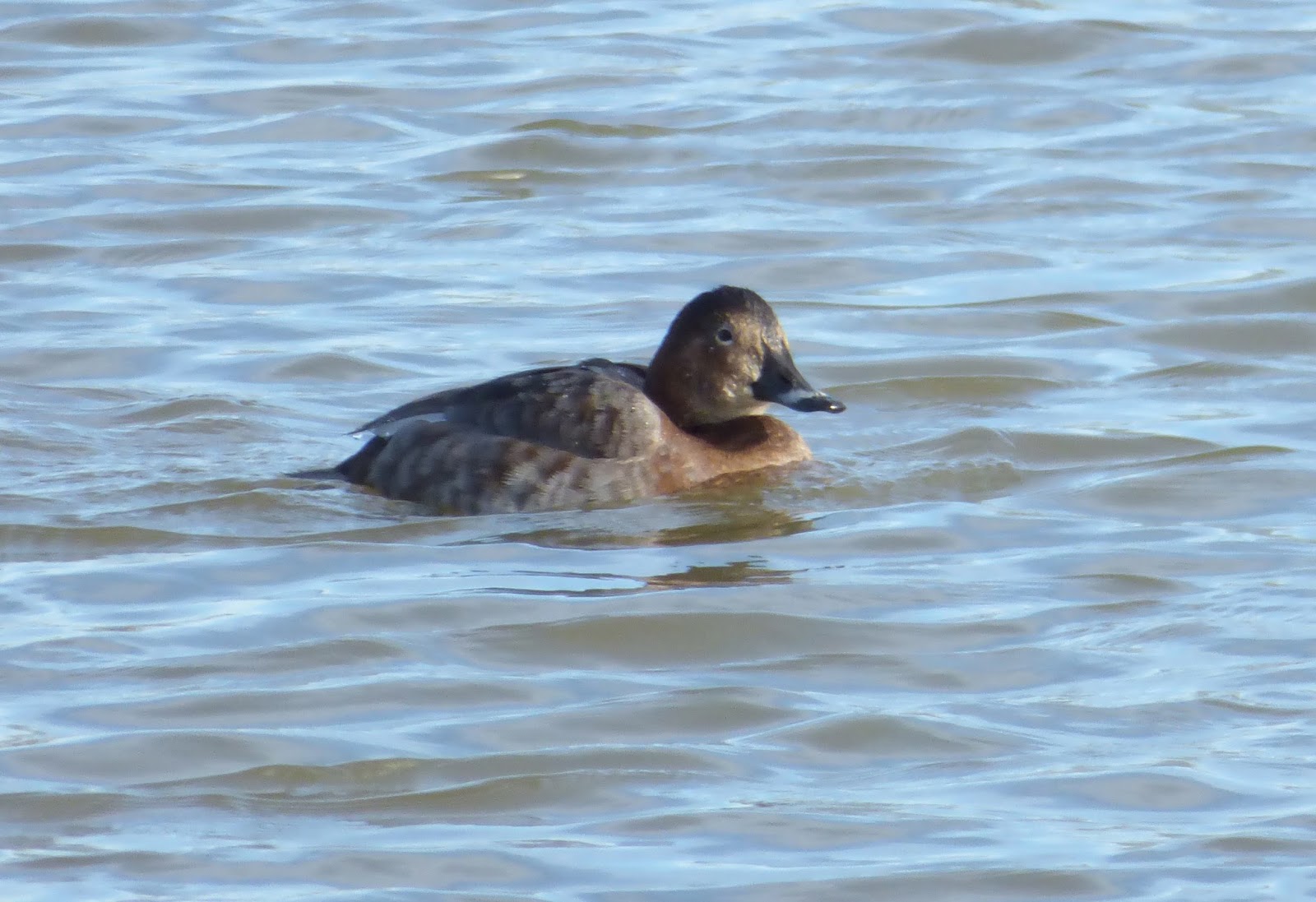
Pochard
Little Egret
Green Fich
Look out over the reserve
Greenfinch flock

After meeting Jim Winsper from the West Midlands Bird Club regarding our negotiations about Salford Priors I was really impressed with his genuine passion and drive for the club and to deliver the best reserves possible for the members. With membership being just £30 (which includes access to four reserves and a brilliant annual report) I decided to join up. The club also has a fantastic new website that was launched last year. After multiple patch visits to the pits recently I opted to make use of my membership by visiting Ladywalk Nature Reserve. The reserve sits in the Tame Valley and shows how wildlife can succeed in flooded gravel extraction workings.  

The reed bed is well known for wintering Bittern however despite my best efforts they were playing hard to get on my visit. Whilst on Bittern stakeout duty, the feeders to the side of the B hide were visited by Willow, Marsh Tits and a Greater Spotted Woodpecker. Out in front of me there were a selection of nice birds including Water Rail, Little Egret, Goosander, Pochard, Teal, Shelduck whilst a Sparrowhawk flew through the reserve hoping for an early lunch.

The feeders around the reserve were very busy with a cracking range of the more common birds including Bullfinch, Reed Bunting, Greenfinch, Chaffinch, Blue & Great Tits.  A Siberian Chiffchaff had been reporting near the reserve entrance however the bitter cold day put pay to any thoughts of a longer session. 

Will have to be next time for the Bittern…………..

Tuesday, 16 February 2016

Stonechats at Avon Meadows


The wife and I stopped at a new nature reserve on Sunday afternoon after visiting her Mom in the middle of Pershore. The wetlands were created after a public consultation in 2007 to soak up excess water when the river suffers flooding. Sightings have included a Great White Egret, Black Tailed Godwit & Barn Owl. The reed bed does attract good numbers of Starlings however none had been seen for a number of weeks. 

During our short walk we saw four Stonechats around the river area not seemingly to be bothered by us walking by. A large number of gulls flew over heading south to their roost site. As the light faded and we headed back to the car a Water Rail called from the reed bed. If are ever passing this way its worth stopping by and they have recently added a number of scrapes which could attract waders pending on the disturbance.  More details about the site is available here


Monday, 15 February 2016

Redditch Starlings

The first groups assemble around church green east above the Church
The flock builds
Building numbers
Early flyover 
Murmuration gathers pace
Starlings over Redditch
Impressive view
Streetmap
Park anywhere near the Town Hall
Bridge camera video
Phone video
Following a tip off via the wife's Facebook I took the five minute journey into Redditch town centre to see if the reported Starling murmuration was true. Arriving at 4.45pm there was already a handful of wildlife fans awaiting the spectacular event. The best place to view the birds is from anywhere near the town hall, higher the better. The multi storey car park was a perfect spot.

It was brilliant to see just a small flock of around 30 birds build to approximately 5,000. There could well of been many more as counting proved very difficult. The birds started to assemble around Church Green East before edging closer to the Town Hall before dropping in the Leylandii trees to roost. 

I would warn anybody going that the security from the shopping centre did try and move people on unsuccessfully however there are many places to view the birds but obviously the best place is on top of the car park.

Starling murmurations occur when many individual birds gather together and fly as a group to form swirling aerial patterns in the sky. Sometimes called 'the ballet of the skies', this biological phenomenon is very poorly understood.
Starling numbers have declined alarmingly - since the mid-1970s the UK population has fallen by 66%. The starling is now red listed in the UK as a bird of immediate conservation concern. The cause of the starling decline is thought to link to habitat loss and reduction in food, but much is unknown.
In 2014, the Royal Society of Biology and the University of Gloucestershire teamed up to try to answer some of the many questions surrounding the mystery of starling murmurations. Over 1,600 sightings revealed some interesting results about location and duration of murmurations. This autumn they are calling on the public to send in more specific information in order to discover more. (Royal Society of Biology) 

Sunday, 14 February 2016

Owling about looking for February patch points

Oystercatcher in flight
Lapwings on main spit
Oystercatcher
 Teal
Pophills Green Sandpipers
Little Owl (taken last winter)
Peregrine close up

Looking back on my records of the birds I've recorded in previous February's (but have not seen this year at the pits) include Dunlin, Common Sandpiper and Goosander. Visits to find these have continued to be short walks from the car.

We had two new additions on the feeders this week with male Bullfinch paying a visit looking for an easy feast. The bird we would like to attract are Siskins but no luck as yet. 

Over the main pit two Peregrine battled - clearly a youngster trying to muscle into territory already held by our resident bird. Duck counts remain disappointing over all. Two of the five Shelduck look paired up whilst the Teal numbers continue to drop as more habitat is restored around the site. Two Oystercatcher were recorded on one day by Paul but I've only seen one myself.  Seven Buzzards were enjoying Fridays good thermals above the plantation.  Grey Heron's seem to be more active at the moment and they are spending plenty of time in the fields surrounding the pits (seven were at Abbots Salford).

At least six Green Sandpipers are still present on Pophills normally around the small island. The heavy rain has rapidly increased the water level. Skylarks are very actively displaying all around this area and can't be missed. Spring can't be far away.

Paul was keen to see the local Barn Owl one evening however that search was in vein but we did discover calling Little Owl & two Tawny Owls. Towards the south of the recording area looking for Grey Partridge & Brambling,  50 Linnets, 30 Yellowhammer & 35 Chaffinch were noted.

Friday, 12 February 2016

Patchwork Challenge Podcast Launches


This week saw the launch of the new Patchwork Challenge podcast. This handy podcast provides you with all the latest PWC news on top of birding news from further afield. Episode 1 features a round up of the Best finds from #PWC2015 and the leaders in #PWC2016. There is a conversation with Rob Adams from Spurn about migfest, the new Spurn Bird Observatory Trust building and the YWT visitor centre.

First impressions were very good. The challenge will be to find enough content without going over old ground. Personally I'd like to hear about some of the smaller patches and why people take on such tasks. 

You can find the podcast on iTunes or SoundCloud.