Saturday, 8 February 2014

Crossley Guide a worthy buy


Whilst The Crossley bird identification book might not be the traditional field guide I must report personally I found it a great reference tool. The book's revolutionary plates shows photographs of birds in typical habitat, enabling users to picture species as they would look in the field. 

The guides tries to illustrate all plumages, as well as showing the birds at different distances from the observer in panoramic lifelike settings.

My only area to improve would be amount of pages dedicated to very common birds such are garden tits. Copies can be picked up for around £10.00 on Amazon, a rare bargain considering how much work went into producing a book of this quality.


Goosander land at Mill Pond

 Goosander on Mill Pond
 Little Grebe
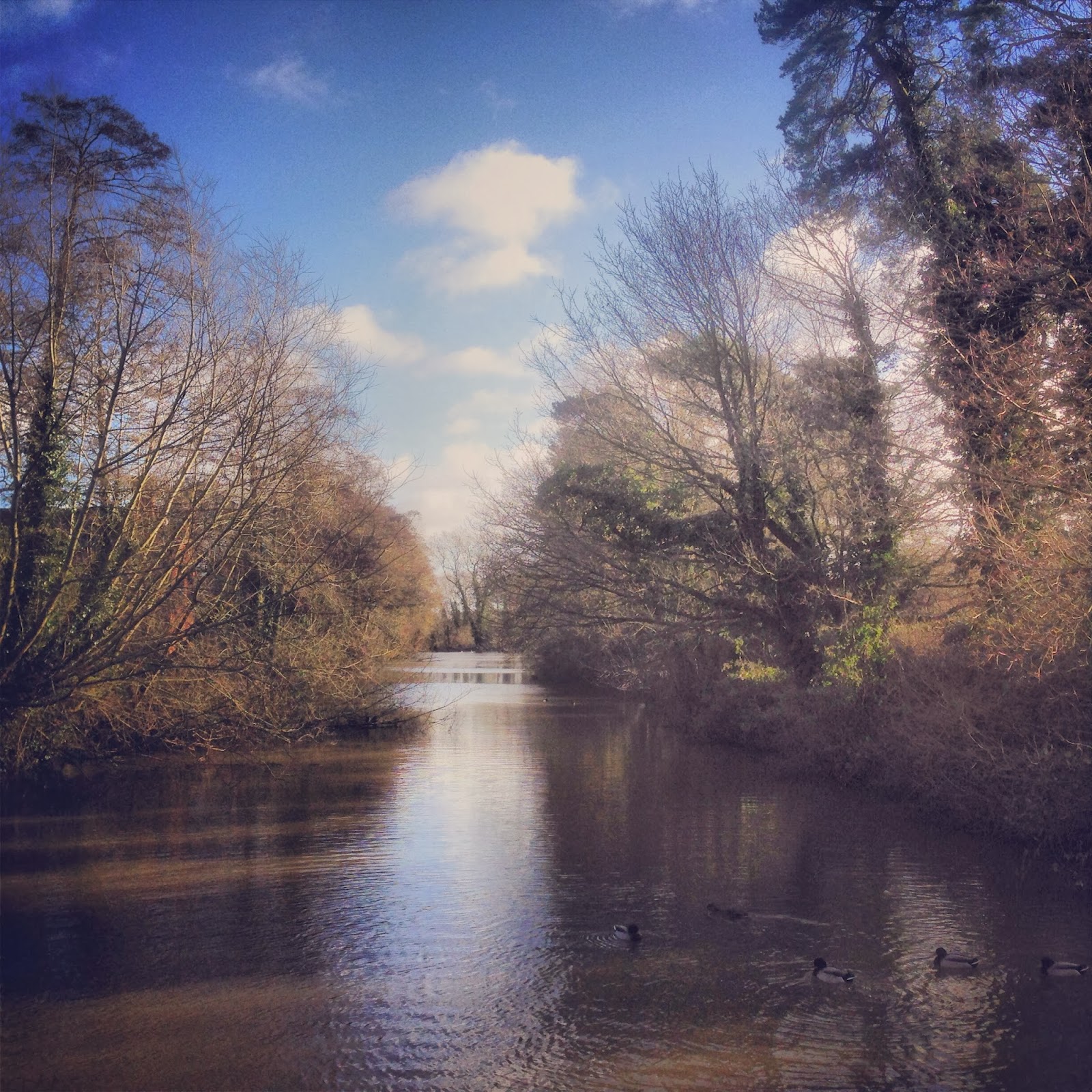
Mill Pond

I haven't visited the north of the patch for quite a while so I had a tour round hoping to try and find any new arrivals. The Fisheries were very quiet except a flock of Canadian Geese and a huge flock of corvids. A number of Lesser Black-backed Gulls flew over before I headed to Mill Pond by Forge Mill Needle Museum.

You can park in the museum car park and stand on the footpath that heads towards Abbeydale. I found 3 Goosander, 1 Grey Heron, 1 Tufted Duck, 20 Mallard, Song Thrush and a Little Grebe to round off a pleasant walk.

Wednesday, 5 February 2014

150 up at Cotswold Water Park

Ruddy Shelducks
Ruddy Shelducks
Ruddy Shelducks
Pit 44
Central area of the Water Park


With the Saturday morning weather forecast looking hopeful I decided to head to the Cotswold Water Park. The water park covers over 150 lakes made by gravel extraction over a 40 mile radius. A simple hours journey went very quickly and a couple of Kestrel were observed. The Park lies just to the south of Cirencester and there is a nice Visitor Centre and Cotswold Outdoor store called the Gateway Centre as you peel off the A419. Ideal for a mid morning coffee and cake.

With so many lakes to see I contacted local birder Bob Phillpott who marked my card to where the good numbers of birds were at the moment. His tip to take the wellington boots was a great one given the local flooding.

My first stop was a flooded field near Down Ampney where 2 Ruddy Shelducks were feeding close to the road side. They did a quick lap of the field before settling where I take a distance digiscope image. The road was flooded in places and the car got a decent soaking. A Little Egret looked on struggling to understand what all the fuss was about.

I then took the short drive to a central point where I could explore a number of the pits. Plenty of Chaffiches were in the car park and I then picked up a close Yellowhammer (first of year) and a Goldcrest. On pit 44 there was 1 Male Goosander, 4 Great Crested Grebe, 20 Red Crested Pochard (another year tick), 20 Tufted Duck, 1 Cormorant and 2 Moorhen. The Pochards moved considerably closer after a while so I thought it was worth getting a minute of video coverage given their stunning colour.

I was very keen to find a wintering Smew but despite some intense scanning I couldn't locate one. I was relieved not to see one had been reported once I'd got home. Flocks of Redwing and Fieldfare were present all over the park. Other sightings including a flock Wigeon, Red Crested Pochard, Pochard, Goosander, Grey Heron, Goosander, Canadian Geese, Tufted Ducks. A pair of Common Buzzard took flight from a hedgerow as I headed back to the car. 

On the way home I stopped at Ufmoor Wood near Halesowen for my second attempt to see the reported Yellow-Browed Warbler. No luck again despite a number of Worcestershire birders all doing their best. The wood was pretty quiet in fact, I only picked up one flock of Long Tailed Tits in two hours along with Goldcrests. I did find a pair of Marsh Tits on my Thursday visit close to the main path. 

Year list passed the 150 mark by the 1st February so a great start to the year. Big targets for this month are Smew and Jack Snipe. I have a half term trip planned to Devon and hope to see Cirl Buntings for the first time.


Monday, 27 January 2014

Parrot Crossbill & Titchwell Lightning Strike


Here is a my attempt to digiscope a Parrot Crossbill on Saturday and also the lightning strike at Titchwell.

Sunday, 26 January 2014

Sunday afternoon Twitch

 Worcester
 Hams Hall
Afternoon twitchers wait for another view

Heavy rain greeted me as I got up after yesterday's mammoth Norfolk session so restricted me to the hour long RSPB Garden Watch. The hour produced a just a single Wood Pigeon. A Dunnock teased me with a late arrival but sadly it was outside the allotted time.

I then needed to take my youngest to Kings School, Worcester for his cricket training. Whilst he trained hard I took a walk along the river and it was good to see the levels starting to lower. With the weather getting increasingly better I decided to try my luck after his training and head up the M42 to junction 9 to the strange location of Hams Hall to see the reported Hume's Yellow-Browed Warbler. This industrial estate had produced Firecrests in recent winters. The local sewage flow and river must produce a good range of food source. 

The reports were of the bird showing on and off so it was great that as soon as I set my scope up the little beauty popped up on a Hawthorn bush straight in front of the audience. It worked its way up the branches before flying to a near by tree where the photographers tried hard to get a clear image. Despite a further look I was unable to relocate much to annoyance of the late arriving twitchers who tried in vein for a sighting. A Green Woodpecker flew across the brambles as I turned and headed back to the car. 

Winter Norfolk raiding mission

 Dark-Belled Brent Geese at Hunstanton
 Dark-Belled Brent Geese
 Holme
 Parrot-crossbill
 Hunstantion touchdown
 Sea watching at Titchwell
 An arty image from inside the hide
 Sun setting at Titchwell
Path back to the car

A 3am wake up was in order to meet fellow midland birders Gert Coldfield, Craig Reed and Mike Wakeman as we headed for a day on the North Norfolk coast.

Wolferton was our first destination and seemed like a good option given the fog that needed an hour or so to lift. We were hoping to grasp a look at the elusive Golden Pheasant however many others seemed to have the same idea and we left unsuccessful.

Hunstanton was like a ghost town as we drove towards the promenade. A flock of Common Gull were feeding on a school playing field with a couple of Oystercatcher. A sharp breeze made us all wrap up as we took in good views of a large flock of Dark-Belled Brent Geese. The flock seemed to get bigger throughout our stop and it was great to see them on the sea and beach. A small numbers of Fulmars could be seen on the cliff tops and gliding with their stiff wings over the sea. Good numbers of Turnstones and Oystercatchers were observed on the beach whilst a group of 14 Red-Brested Merganser dived off shore.

Holme was next on our tour and we opted to head right down towards the Observatory rather than the Golf Course side. We were hoping for a couple of Owls but the fog had really put pay to this. After a short walk we picked up a number of Marsh Harriers, Pick-Footed Geese, Redshank, Wigeon, Greylag, Buzzard, Lapwing and a Peregrine whilst a Greenshank and two Little Egret were on the marsh.

We then pulled up at Burham Ovary in the hope of seeing a Rough Legged Buzzard that had been seen recently. There were Buzzards present but sadly not the one we wanted. Egyptian Geese were in the fields looking towards Holkham but as we were preparing to leave Gert picked up a pair of Red Kites, most definitely a Norfolk first for us all.

The journey to Edgefield Woods near Holt produced Red-Legged Partridge and a Kestrel that we also saw on the return journey. Some smart navigating took us straight to the lay-by and a five minute stroll down through the clearing to where 3/4 birders were looking upwards. We picked up the call of the Parrot-Crossbills as we approached. Whilst you see movement at the top of the trees it was hard to get a great view of the birds. However once in the scope you could clearly see these powerful little bruits feeding then tossing the cones downwards towards the watching audience. Whilst I perhaps wouldn't travel any distance to just see these birds it was great to see them on a day like this. 

Titchwell is the equivalent of Wembley as it always delivers a brilliant visiting experience. Good signage, parking, shop and cafe. Both Gert and I took advantage of the cafe by grabbing a hot pastie which we scoffed on the walk to the beach. The dunes that once protected the reserve had disappeared along with the wooden walk way and viewing platform. Many Goldeneye were visible along with a number of Scoter flocks. 

Wanting to watch the raptors coming into roost we headed to the Parrinder Hide. The water level was as high as I'd ever seen there and the flocks of waders were not abundant as in previous visits. Ruff,Golden Plover, Knot, Snipe and Scaup were day additions before Mike located a Mediterranean Gull at the rear of the island in front of us.

Marsh Harriers moved across the reserve into roost. A saw at least nine birds all in the air at the same time but it would be difficult to count the total number as the light faded. Suddenly the dark skies turned stormed and rain hammered down. Thunder and lightning again struck making the birds and ourselves all jump. It looked like every bird on the reserve took to the air. As the wind and rain got stronger a flock of Golden Plover battled together in flight against the wind right in front of us.

Once the storm passed we moved around to the main path on the side of the reed bed. After stopping Gert located a Ring-tail Harrier. As I was trying to locate it I found a Barn Owl in flight. For a few seconds I had both birds within my scopes vision. A stunning way to end the day. The Barn Owl sat up on a viewing screen for a good ten minutes before starting to hunt again.

With boots changed we headed to the local boozer for pint of local cider and ale to count up the days species. 97 in the day. A great return after a slowish start.

10 new birds for Year List - Sanderling, Fulmar, Red-Legged Partridge, Egyptian Geese, Parrot-Crossbills, Marsh Harrier, Ruff, Knot, Mediterranean Gull, Barn Owl.

1 Lifer :- Parrot-Crossbill


Monday, 20 January 2014

Pink Foot at Throckmorton

Pink Foot in front of Greylag
 Throckmorton Lagoons
Barnacle Geese
 Buzzard

I needed to leave Otmoor on time to enable me to get back to the Outlaws in Pershore to watch my beloved Southampton FC on the TV. They started well taking a 2-0 lead but had to settle for a 2-2 draw. After a nice lunch I checked Worcester Birding news only to see a Pink Footed Goose had been reported at Throckmorton Lagoons. Given it was only a mile from the normal journey home I paid this site a quick visit. Roadside parking and no signage wasn't the best but as I walked towards the lake I could see another birder Worcestershire Gavin Armitt. Gavin kindly put me in direction of the bird straight away. The bird was preening on the distant island. I took a shot for the record but distance and light was poor. 

A Peragrine flew across us and a Kestrel hunted on the opposite side on the lake. The lake also contained some local Barnacle Geese, Greylag, Tufted Duck, Pochard, Little Grebe and Canadian Geese. 

The Pink Foot was a Worcestershire first for me and certainly ended a very busy day on a great note. On the way home I took the Buzzard photo with my phone from my car seat. 

The weekend finished by sitting in the fading light at Upton Warren hoping to see the Bittern resulting in another failure.