Sunday, 10 May 2020

Day of the Grizzled & Dingy Skippers

Grizzled Skipper
Grizzled Skipper
Dingy Skipper
Dingy Skipper
Dingy Skipper
Dingy Skipper
Lesser Treble Bar Moth

With a warm week forecast and an extra day off I intended to try and get to a couple of local sites I was too late for last year. My campaign to photograph all the UK Butterflies didn't really start in earnest until I'd seen first my Swallowtails in Norfolk on the way back from the Horsey Lesser Grey Shrike midway through 2019.  

Honeybourne is only a few miles from the pits so armed with my local knowledge from Lloyd I headed to this very small location. The area is an old railway line and is not a dedicated reserve. The good thing was, I was unlikley to see anyone else which I didn't except one local dog walker.

The actual first part of the walk is quite pretty and I recorded two Grizzled Skippers after quite a few ups and downs of the same strip of path. On the other side of the railway line butterflies were much more plentiful with good numbers of Dingy Skippers and a few more Grizzled. Other sightings included a Small Heath, Peacock, Speckled Wood, Orange-tip and Brimstone.

Bird sightings included Garden & Willow Warbler, Chiffchaff, Swallow, Lesser & Common Whitethroat & a Cuckoo.

Cuckoo time

Finally a clear shot of that Cuckoo
Cuckoo calling
Common Whitethroat
Common Blue
Argus
Small Heath
Young deer huddled together

Things have very much settled down at the pits now. Hirundine numbers vary for the condition, there were as many as 60 Swifts on Sunday, 150 Swallow, 80 House Martin and 50 Sand Martin. The Cuckoo numbers have increased to three, 2 males & 1 female. I was bemoaning my luck how they never show that well on Saturday when I perhaps captured my most pleasing image of a Cuckoo. 

During my walk on Sunday I recorded our first Dunlin of the year. Dunlin have become genuine patch gold since the water levels have increased. This little beauty took the site up to 102 for year.

We have some early butterfly broods emerge with Common Blue, Brown Argus & Small Heath all recorded around the main pit. 


The amazing Green Hairstreak

Green Hairstreak
Green Hairstreak
Green Hairstreak
Green Hairstreak

This stunning Butterfly was smaller than I expected, 27-34mm. I had tried to see them on my travels without success so I followed up a good lead from Lloyd. My initial scanning was unsuccessful so I started to work through the numerous Broom plants. That strategy was unsuccessful so started scanning the sky and there I found 2 males chasing each other high above me. Bingo ! As the temperature dropped the butterflies settled on the top of a young oak enabling me to get some images for my collection. The Green Hairstreak is a butterfly that holds it's wings closed except for in flight.

Saturday, 9 May 2020

Birds of Bredon Hill

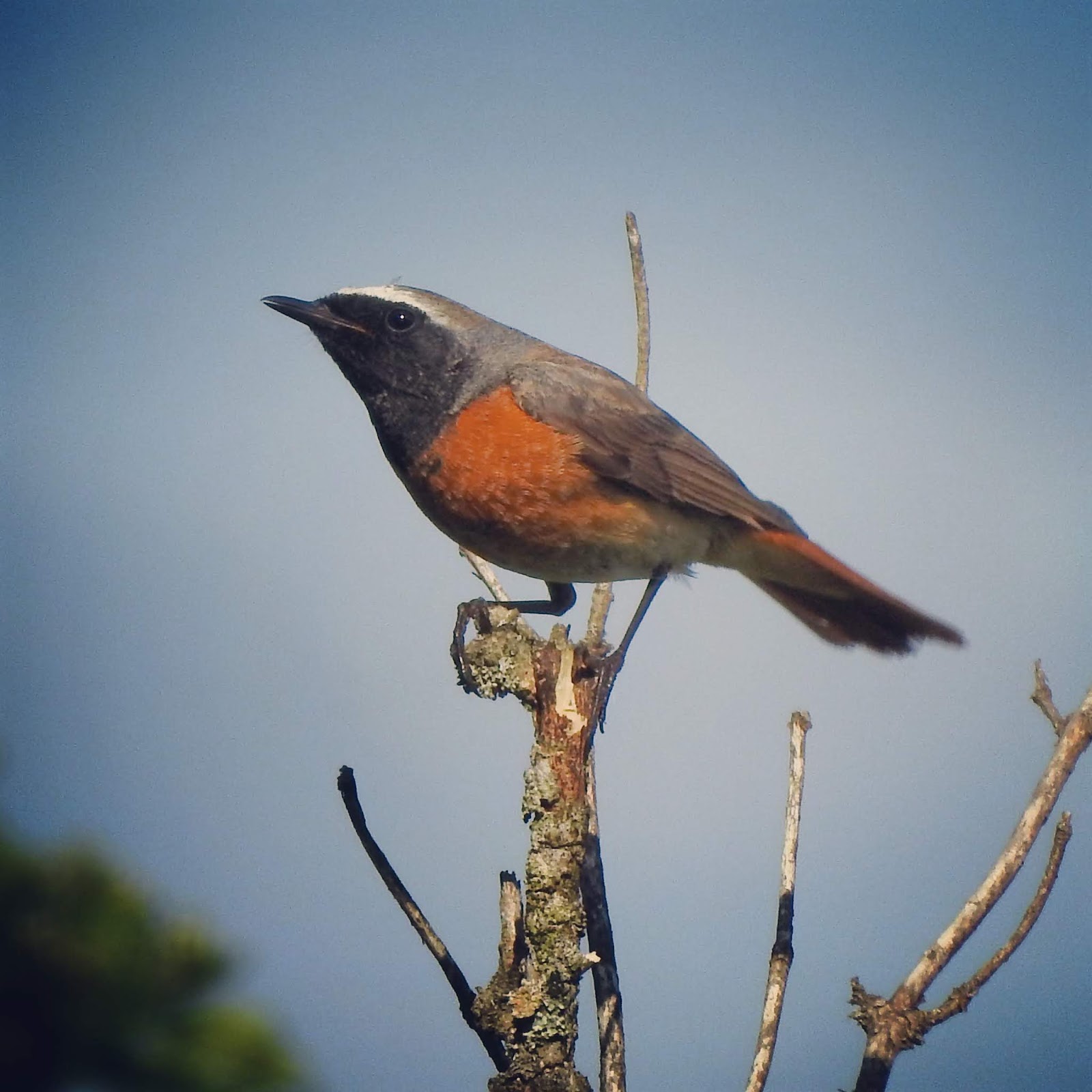
Redstart
Great stop 
Wheatear
 Wheatear
 Couldn't resist this photo
 Busy on the paths
 The regular Redstart view
 Common Redstart
 Yellowhammer
 Deer farm always nice to see
 Escapement
 Meadow Pipit
 Common Whitethrost
 Views to the north
 Tree Pipit
 Common Redstart
 Young lambs
 Common Whitethroat
 From the top you get some interesting views looking down at the birds
Ring Ouzel footage from spring 2019

 I found this drone footage online which shows off Bredon very well 

Bredon Hill location
Easy access from all directtions

Bredon Hill is the largest of the Cotswold ‘outliers’ and is the only Cotswold hill to lie fully within Worcestershire, although part of the escarpment at Broadway also lies within the county. Both peaks have distinctive 18th century follies at their summit.

Bredon Hill is dotted with standing stones, it has three Iron Age forts, a Norman castle, a holy well, a disappeared cave and a folly. A host of tales and folklore add further mystery if you give it a Google. Just a few miles from Evesham, it is an easy drive from all direction.
 

To escape the current pandemic madness I've been walking Bredon as it is an area of natural beauty, is only a short drive and you can disappear on the slopes and not see anyone. For me, it's always been worth an annual visit to try and see the Ring Ouzels moving through but there is so much more than that. You are guaranteed to see something amazing on each visit and the view from the top is something you should always take in. But don't expect an easy walk if you have never been, there are many options to the sumit, all guaranteed to get those lungs pumping.

The site has records of Dotterel, Stone Curlew, Pied Wheatear four species of Owl, Montagu's Harrier, Marsh Harrier, Hen Harrier, Hawfinch, Great Grey Shrike, Black Redstart, Pied & Spotted Flycatcher, Shore Lark, Wood Lark, Wheatear *, Ring Ouzel *, Whinchat *, Stonechat* and Crossbill* (* are recorded annually) 


Breeding birds include the amazing Common Redstart, Tree Pipit, Red Kite, Sky Lark, Green & Greater Spotted Woodpecker, Linnet, Yellowhammer, Common & Lesser Whitethroat, Willow & Marsh Tit, Blackcap, Raven, Buzzard & Kestrel to name just a few. Also seen from hill have been Osprey & Iceland Gull.

I've enjoyed taking my camera up this spring and just waiting in different areas to see what I can capture. It's amazing what happens in front of you if you just wait. On my last visit, I watched three Jackdaws chase a Weasal through some scrub after it tried to raid their nest. 

Once you have had your walk make sure you visit the Elizabeth pub in Elmley Castle for a fantastic lunch & a pint. (Once reopen)


Monday, 4 May 2020

Gropper stars on week 7 of lockdown

 Grasshopper Warbler

 Many angles was possible
 And various poses
 Probably my favourite
 Down low
 Up high
 Close up
Garden Warbler
                             West Mids All dayer result - thanks to Phil Andrews


Very little change at the pits this week with the only addition being our first Swifts of the year, taking us to 101 species. The numbers varied pending on the weather but there was continued good movement of Swallows, House & Sand Martin. The Cuckoo count increased to two and a Garden Warbler was recorded again.

The best species of the week was a Grasshopper Warbler at Morgrove Coppice in Studley. This bird showed amazingly well enabling me to get some pleasing images. I popped down again on Saturday to record it's attendance as part of the West Midlands All Dayer event. A total of 134 species were recorded as part of the day. 

The Studley count moved to 88 with a Swift whilst my home lockdown walk list is stuck on 61.